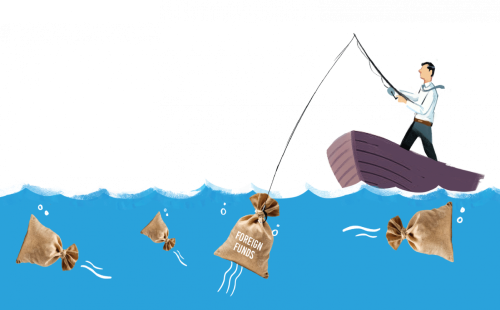
Govt plans $3.9b in foreign aid for 17 key infrastructure, tech schemes
The government has shortlisted 17 new projects
for implementation with foreign financing, with the proposed schemes carrying a
combined estimated cost of Tk48,199.60 crore or around $3.9 billion at the
current exchange rate.
Prepared under preliminary development project
proposals (PDPPs), the projects will be placed at the Foreign Aid Search
Committee for a final decision on seeking external loans or grants. The
committee is scheduled to meet on 23 July.
According to ERD documents, the projects
prioritise key sectors including science and technology, urban infrastructure
and slum development, climate and flood control, rail connectivity, artificial
intelligence, technical skills development, and waste management.
The proposed projects are expected to be implemented
between 2026 and 2032. They aim to strengthen infrastructure, improve
resilience to climate risks, generate local employment, and enhance export
competitiveness to support sustainable socio-economic development.
The government plans to approach the World Bank,
ADB, AIIB, IsDB, Jica, Koica, UNDP, Saudi Fund for Development (SDF) and other
agencies.
Several projects have already drawn interest
from potential financiers, while others will be placed before the Foreign Aid
Search Committee to identify suitable funding sources.
Economists urge caution over big-ticket spending
While several projects have already drawn
interest from potential financiers, economists advocate a more prudent approach
to new commitments.
Sayema Haque Bidisha, professor of economics at
Dhaka University, warned that the government should exercise greater caution
before taking on large new mega-projects.
"Rather than launching new mega-projects,
priority should be given to completing ongoing and unfinished schemes,"
Bidisha said. "Accelerating the implementation of existing projects would
help improve development outcomes while easing immediate financing
pressures."
She urged the government to prioritise projects
carrying a higher grant element and to focus investments on human capital –
including health, education, skills, technology, AI, and institutional
capacity. She added that smaller, targeted projects deserve greater attention
alongside major infrastructure schemes, as they typically come with more
favourable lending terms.
How foreign financed projects selected
ERD officials said projects seeking foreign
financing must first receive policy approval from the Planning Commission,
which then forwards the list to the ERD for assessment of their suitability for
external funding. The Foreign Aid Search Committee subsequently identifies the
most appropriate development partner based on each project's requirements.
In many cases, the process also works in
reverse, with projects tailored to meet the priorities and conditions of
specific lenders. Some schemes are designed with particular development
partners in mind to improve their chances of securing financing.
Bangladesh secured $4.794 billion in financing
commitments from development partners in FY26, including $1.564 billion in
budget support, according to ERD.
The government aims to secure more than $6
billion in fresh commitments from development partners in FY27. The budget has
allocated Tk43,000 crore in external support.
Rail project revived with new lenders after
Indian exit
One of the projects proposes revival of a key
rail project to build a new dual-gauge railway line from Bogra to Shahid M
Mansur Ali Station in Sirajganj, according to ERD sources.
The government has sought alternative funding
for the project. The AIIB has expressed interest in financing it, while the ERD
expects the ADB could also provide a loan.
Officials said loan proposals may also be sent to
the IsDB. The plan is to implement the project with financing from whichever
partner offers the most concessional terms.
Under a revised proposal, the project's
estimated cost has almost doubled to about $843 million, up from around $453
million when it was approved in 2018.
The project was originally scheduled to be
implemented under India's Line of Credit (LoC). However, prolonged delays in
the approval process stalled progress for years.
Following the change of government last year,
the authorities decided not to proceed with several projects under Indian
credit, prompting the search for alternative financing.
Slum improvement at Karail, Sattola, Bhasantek
The Dhaka North City Corporation has proposed
the "Slum Improvement at Karail, Sattola and Bhasantek Area" project,
at a cost of $960 million.
The project will provide safe water supply,
modern sewerage and solid waste management services, while upgrading internal
roads, public health, and the urban environment.
Dhaka North has also proposed the "Kallyanpur
Canal Project", estimated to cost $145 million, for implementation between
2026 and 2031.
The project aims to ease waterlogging, modernise
the drainage system and improve solid waste management. It also includes canal
restoration, climate-resilient infrastructure and institutional capacity
building to support Dhaka's long-term environmental sustainability.
The Local Government Division has also proposed
a $250 million project aimed at strengthening urban resilience and developing
green, sustainable infrastructure nationwide.
Scheduled for implementation from January 2026
to December 2030, the programme is expected to benefit around 1.5 crore urban
poor through climate-resilient and pro-poor urban development. The government
is seeking funds from the UNDP, the WB or the ADB.
Remittance, labour welfare
The Bureau of Manpower, Employment and Training
has proposed establishing a language laboratory and automobile workshop at
Dhaka Technical Teachers Training Institute.
The Tk31.25 crore initiative will enhance
English language proficiency among teachers and students while providing modern
hands-on training in automotive mechanics. The project is scheduled to run from
January 2026 to December 2030.
Meanwhile, the Wage Earners' Welfare Board has
proposed the "Leveraging Remittances in Bangladesh" project,
estimated to cost Tk1,013.05 crore.
The project aims to make remittance transfers
easier and cheaper, improve financial literacy and encourage migrant workers to
channel their earnings into productive investments.
Research and tech projects
The Bangladesh Hi-Tech Park Authority has
proposed a technical assistance project to strengthen the country's artificial
intelligence (AI) sector.
Scheduled for implementation from July 2026 to
December 2029, the project is estimated to cost about $15.7 million, with Koica
providing a $12.9 million grant and the government contributing around $2.7
million.
Officials at the ICT Division and the ERD said
South Korea has given initial approval for the funding. Following review by the
Foreign Aid Search Committee, the proposal will be sent through the ERD to
Korea for final approval.
The Bangladesh Council of Scientific and
Industrial Research (BCSIR) has proposed four grant-funded projects. These
include developing a biorefinery system using waste biomass to produce
fertiliser; converting fish waste into high-value bioactive compounds for
export; strengthening SMEs' export competitiveness and ESG compliance; and
assessing flood, cyclone and heatwave risks to support climate-resilient
infrastructure planning.
The four projects are scheduled for
implementation between July 2026 and September 2027, with estimated costs
ranging from Tk5.39 crore to Tk7.85 crore.
Bridge projects
The Roads and Highways Department (RHD) is
seeking foreign financing for the construction of the Mongla Bridge over the
Mongla River in Bagerhat.
The bridges are estimated to cost $139.95 million.
According to RHD officials, it is planned as a permanent alternative to the
existing ferry crossing, improving connectivity and ensuring uninterrupted
transport across the river.
The Local Government Engineering Department
(LGED) has proposed the "Construction of Five Important Bridges on Rural
Roads Project" to improve rural road connectivity.
The project aims to strengthen transport links
at the upazila, union and village levels, creating jobs, reducing poverty and
improving living standards in rural communities.
The project is to cost $274.94 million. The
Saudi Fund for Development (SFD) has given initial approval to finance it.
Implementation is planned from January 2026 to June 2032.