Govt moves to build EV charging stations, battery recycling plant
Highlights:
- Tk25.35cr
EV project launched with Tk23cr UNDP grant.
- Four
bus charging stations and three solar-hybrid charging stations planned.
- First
EV battery recycling plant to be built in Gazipur.
- Target:
1,200 commercial EV charging stations by 2030.
- Private
investment in EVs gains pace after tax incentives.
The government has launched an initiative to
establish electric vehicle charging stations and a battery recycling plant by
2030, following tax incentives introduced in the current fiscal year to
encourage the production and import of electric vehicles.
The Road Transport and Highways Division is
formulating a project titled "Bangladesh Enabling Electric Vehicles
Adoption in the Framework of Sustainable Energy-Based Transportation" with
financial support from the United Nations Development Programme (UNDP).
The project aims to develop charging
infrastructure for electric buses, motorcycles and three-wheelers, while also
building a skilled workforce through training programmes at home and abroad,
officials said.
The proposed project, estimated to cost Tk25.35
crore, will receive Tk23 crore in grants from the UNDP. A meeting of the
Special Project Evaluation Committee was held on 28 June, and the draft
development project proposal is expected to be sent to the Executive Committee
of the National Economic Council for approval after clearance from the Project
Evaluation Committee, according to an official of the Road Transport and
Highways Division.
Charging stations planned at BRTC depots
According to the draft project proposal, four
electric bus charging stations equipped with superfast charging facilities,
each with a capacity of 300-500 kilowatts, will initially be installed at
Bangladesh Road Transport Corporation depots. Each station will be capable of
charging 20 buses simultaneously.
Potential locations for the bus charging
stations include BRTC depots in Jowar Sahara, Mirpur, Gabtoli, Narayanganj and
Narsingdi.
The government also plans to establish three
solar-hybrid charging stations for electric motorcycles and three-wheelers at
Uthali in Manikganj, Ekuria in Keraniganj and the BRTC depot in Chattogram.
These facilities will operate using both grid electricity and solar power.
The charging stations for two- and
three-wheelers will have a capacity of 80 kilowatts, with solar energy
contributing between 25 and 30 kilowatts.
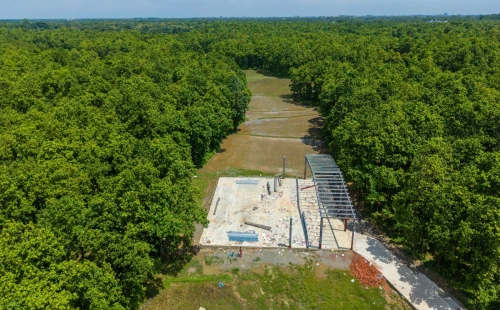
A battery recycling and disposal plant for
electric vehicles will be built at a BRTC depot in Gazipur.
Push for electric public transport
The initiative comes as the government
intensifies efforts to expand electric mobility across the transport sector.
The BRTC has recently sought Tk400 crore from
the government to purchase 100 electric buses and establish 25 charging
stations. Separately, 12 air-conditioned electric buses with 50 seats each will
be procured with government funding.
The state-owned transport operator is also planning
to acquire another 400 electric buses under the proposed "Bangladesh Clean
Air Project", for which the World Bank has offered a loan of $300 million,
according to the draft proposal.
The finance ministry this month directed that
all government sport utility vehicles and cars purchased under the current
fiscal year's budget must be electric vehicles.
Limited charging infrastructure
According to the draft proposal, Bangladesh has
around 15 lakh electric two- and three-wheelers, as well as thousands of
plug-in hybrid vehicles that are primarily charged at homes and garages.
The country currently has only 14 electric
vehicle charging points, partially powered by solar energy, with a combined
capacity of 242 kilowatts. However, the proposal notes that these facilities
are unsuitable for high-load commercial operations.
The Bangladesh Rural Electrification Board has
established eight solar charging stations across the country, each capable of generating
30 kilowatts of electricity and charging up to 20 vehicles at a time, as part
of its efforts to promote renewable energy in the transport sector.
The government has set a target of establishing
1,200 commercial charging stations by 2030, with the Sustainable and Renewable
Energy Development Authority tasked with preparing the regulatory framework and
implementation guidelines.
According to the authority, 32 commercial
charging stations have already received approval, although only nine are
currently operational in locations including Dhaka, Chattogram, Cox's Bazar and
Cumilla.
Private sector interest grows
Following the introduction of electric
vehicle-friendly policies in the national budget, private companies have also
shown increasing interest in manufacturing electric vehicles and developing
charging infrastructure.
Companies that have expressed interest in the
sector include Bangladesh Auto Industries Limited, Nasir Group, Akij Motors,
Runner Automobiles, PRAN-RFL, Walton Group, TMSS, Progress Motors, Sena Hotel
(Radisson Blu), Kazi LPG, Good Luck Filling Station and Isha Kha Group.