Govt to launch AI system to predict supply crises, stabilise essential goods market
The government plans to introduce an artificial
intelligence (AI)-based data analysis system to ensure a steady supply of
essential goods and identify possible market disruptions in advance, Commerce
Minister Khandaker Abdul Muktadir said.
According to a press release, the
proposed system will analyse 10 years of market data, production records,
import-export information and global market trends to help the government make
faster decisions on managing sensitive products.
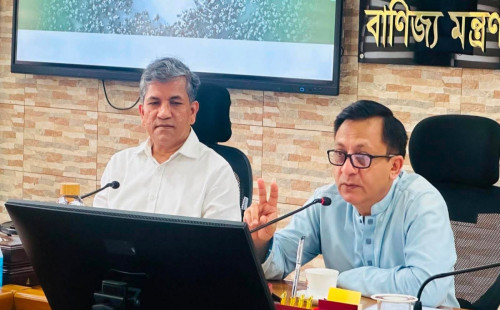
The minister made the remarks today
(28 July) at a meeting on e-commerce implementation at the Ministry of Commerce
conference room. Commerce Secretary Md Ataur Rahman Khan chaired the meeting.
Khandaker said several ministries and agencies currently work separately on
essential products in agriculture, food and industry sectors. The government
now needs a coordinated system that can analyse which goods are produced
locally, which depend on imports and which require a mix of domestic production
and imports.
He said supply disruptions often
lead to price increases. The government's priority is to prevent market
instability by ensuring uninterrupted supply rather than taking action only
after prices rise.
"Whether the government will
reduce prices through subsidies when the prices of any product rise is a
separate issue. Our main goal is to ensure that market instability does not
occur due to a disruption in supply," he said.
The minister said products such as
lentils and onions require continuous monitoring by considering local
production, seasonal shortages, international market conditions and the production
capacity of exporting countries.
He explained that if the country
expects lower lentil production in a particular year, authorities should start
preparations before the harvesting season. They must also assess production
levels and export capacity in supplier countries to decide the best time and
source for imports.
The AI platform will help identify
when shortages may occur, which countries could provide better import options,
and when global markets may offer favourable prices, Khandaker said.
He added that government agencies
currently spend significant time arranging meetings between ministries to
collect and analyse information. An AI-based system could complete the same
analysis within minutes and provide possible future scenarios.
The minister said the Ministry of
Commerce will not operate the initiative alone. It will work with relevant
ministries and agencies, including the agriculture and food ministries. All
organisations involved will have access to necessary data.
He stressed that reliable data
sources will determine the effectiveness of the AI system. The government will
use both domestic information and data from international open-source and
subscription-based platforms to build a comprehensive database.
Khandaker said developing the
system will take time and require several stages. Once completed, it will help
the government make faster and more accurate decisions based on reliable
information.
"Creating the ability to make
quick and accurate decisions based on reliable information is the main
objective of this initiative. It will strengthen the country's market
management system and protect consumer interests," he said.
The meeting also discussed the
development of the e-commerce sector, technology-driven market management and
future action plans.