'Suffering from autonomic neuropathy': What Shahabuddin wrote in his resignation letter
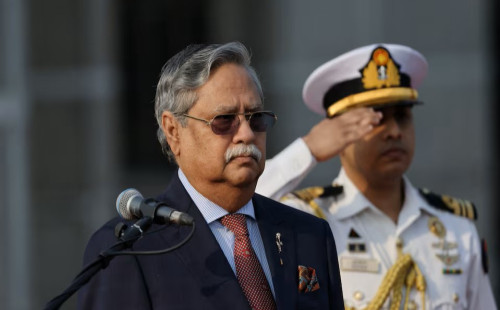
Highlights
- President Shahabuddin resigned citing serious health complications
- He submitted resignation letter, ending his term early
- Shahabuddin cited heart, kidney, diabetes and neurological issues
- He said autonomic neuropathy caused occasional loss of
consciousness
- Speaker Hafiz Uddin Ahmad becomes acting president under Article
54
- Shahabuddin said he helped overcome a constitutional crisis
Outgoing President Mohammed Shahabuddin has resigned from
office, citing serious health complications that have left him physically and
mentally unable to discharge the responsibilities of the country's highest
constitutional post.
He submitted his resignation letter
to Speaker Hafiz Uddin Ahmad today (24 July), bringing an early end to his
five-year term that was due to expire in April 2028.
In his resignation letter, Shahabuddin said he was suffering from heart
disease, hypertension, diabetes and kidney complications, and had previously
undergone coronary artery bypass surgery.
"I am suffering from heart
disease, hypertension, diabetes and kidney complications. I have undergone
coronary artery bypass surgery," he wrote.
The president also revealed that he
had been diagnosed with autonomic neuropathy, a neurological disorder that
causes him to lose consciousness intermittently.
"Due to this illness, I
occasionally lose consciousness for brief periods," he said.
Citing his deteriorating health, Shahabuddin said he was no longer capable of
carrying out the constitutional responsibilities entrusted to him.
"Due to these medical
conditions and the resulting physical and mental incapacity, I am no longer
able to discharge the responsibilities of the important constitutional office
of the president. I require long-term medical treatment," the letter read.
He added that he had stepped down
from office in accordance with Article 50(3) of the Constitution.
Shahabuddin also said he had
carried out his constitutional duties with sincerity, honesty and full
allegiance to the Constitution throughout his tenure.
Reflecting on the political
developments following the fall of the Awami League government amid the
student-led mass uprising on 5 August 2024, he said the country had faced a
constitutional and governance crisis at the time.
"With a view to overcoming
that constitutional crisis, I, in my capacity as president, sought the opinion
of the Appellate Division of the Supreme Court of Bangladesh under Article 106
of the Constitution. Subsequently, acting on the advice of the Appellate
Division, I formed the interim government," he wrote.
According to Shahabuddin, the
interim government subsequently held the general election in consultation with
political parties, paving the way for the formation of the present government.
"Based on the election
results, the present government was formed and is now conducting the affairs of
the state. At present, both the ruling party and the opposition are performing
their respective responsibilities in Parliament through democratic
practices," he said.
The outgoing president further
claimed that Bangladesh had not experienced any constitutional breakdown during
the political transition because of the role he played.
"The country did not
experience any constitutional breakdown due to my firm and constructive
role," he wrote.
Under Article 54 of the
Constitution, Speaker Hafiz Uddin Ahmad will perform the functions of the president
as acting president until a new head of state is elected.
What is autonomic neuropathy?
According to the National
Institutes of Health (NIH), a part of the US Department of Health and Human
Services and the nation's medical research agency, autonomic neuropathy is
damage to the nerves that control the body's internal organs and involuntary functions.
The autonomic nervous system
regulates several essential processes that occur automatically, including heart
rate, blood pressure, digestion, bladder control, sweating, eye responses and
sexual functions. When these nerves are damaged, the body may struggle to
properly manage these functions.
The NIH notes that autonomic
neuropathy can affect different parts of the body depending on which nerves are
damaged.
The condition may cause problems
such as changes in heart rate and blood pressure, digestive difficulties,
bladder problems, abnormal sweating, vision-related issues and difficulty
sensing symptoms of low blood glucose.
The condition is often linked to
long-term diabetes, as high blood glucose and increased levels of fats such as
triglycerides in the blood can damage nerves and the small blood vessels that
supply them.
However, other medical conditions
and factors may also contribute to nerve damage. Early diagnosis and management
of the underlying cause can help prevent the condition from worsening and
reduce complications.