Local airlines go for biggest-ever billion dollar expansion ahead of new 3rd Terminal opening
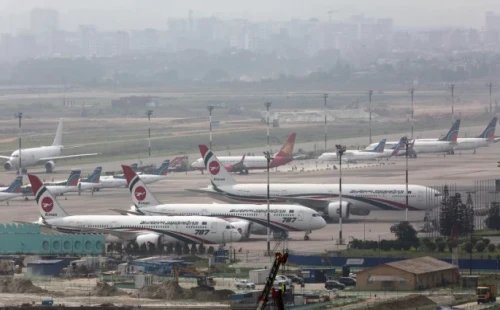
Bangladesh's commercial aviation industry is
gearing up for its largest-ever fleet expansion. Spurred by the massive
capacity created by Dhaka airport's upcoming Third Terminal, four domestic
airlines plan to increase their combined fleet by 78.4% by 2027.
According to airline officials, the combined
fleet of the state-owned flag carrier and three private operators will grow
from 51 to 91 aircraft by 2027, driven by the induction of 40 leased planes.
The simultaneous expansion by Biman Bangladesh
Airlines, US-Bangla Airlines, Air Astra, and Novoair aims to capitalise on
critical infrastructure upgrades at Hazrat Shahjalal International Airport
(HSIA). While the airport's existing terminal was designed to handle 80 lakh
passengers annually, it stretched to accommodate 1.27 crore travellers in 2025—up
from 1.25 crore in 2024 and 1.17 crore in 2023.
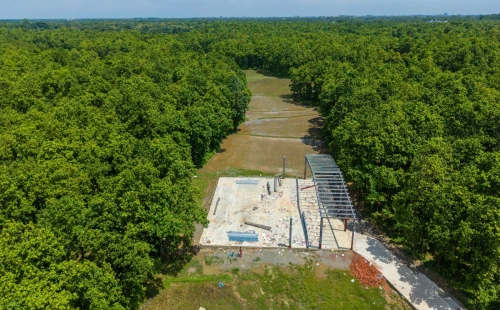
The Third Terminal, which the government plans
to inaugurate either on December 16 this year or in early 2027, will add annual
capacity for 1.2 to 1.6 crore additional passengers and nearly 5 lakh tonnes of
cargo.
Bridging the capacity gap
The aggressive expansion comes as local airlines
push to claw back market share from foreign carriers, which currently control
roughly 65% of Bangladesh's international passenger market despite 38 foreign
airlines operating in the country.
Aviation analyst and former Biman board member
Kazi Wahidul Alam noted that the International Air Transport Association (IATA)
projects passenger traffic through Dhaka could nearly double to 2.5 crore
within the next decade. "The biggest-ever fleet expansion is now a
commercial necessity," Alam said.
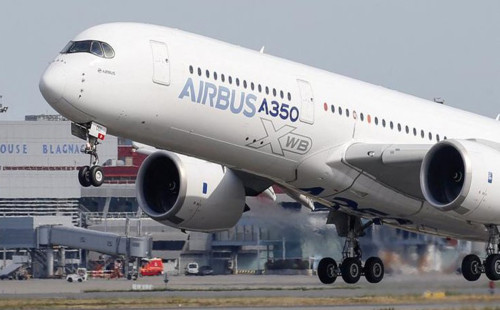
To meet this demand, local operators are
bringing in a mix of Boeing 787-9 Dreamliners, Boeing 777s, Boeing 737-8s, and
ATR 72-600 turboprops. The network strategy targets routes across South Asia,
Southeast Asia, the Middle East, and Europe.
State Minister for Civil Aviation and Tourism M
Rashiduzzaman Millat welcomed the growth, noting that increased aircraft
operations will boost aviation sector revenues, enhance competition, and
improve service quality.
Biman eyes 10 leased jets ahead of mega-purchase
National flag carrier Biman Bangladesh Airlines
plans to lease 10 aircraft to expand its current fleet to 29 by 2027,
representing a 52.6% increase.
This short-term expansion relies on leased
aircraft to bridge the gap until newly manufactured aircraft become available
after 2030, keeping it separate from Biman's proposed $3.7 billion purchase of
14 Boeing aircraft scheduled for delivery between 2031 and 2035.
The state-owned carrier has already invited
international proposals to dry lease three Boeing 787-9 Dreamliners for six
years, targeting delivery by January 2027. To ensure transparency, the
government has initiated the appointment of an international consultant,
vetting around 40 applications to select a qualified firm to oversee the
leasing process.
State Minister Millat said, "We want to
ensure that the Biman leasing process is conducted with complete transparency.
To that end, we have initiated the appointment of an international
consultant".
Biman currently serves 22 international
destinations and is planning further expansion into East Asia, Europe and North
America, its officials said.
Private carriers accelerate regional and
long-haul ambitions
US-Bangla Airlines, already the largest domestic
carrier with 25 aircraft, is planning the largest private fleet acquisition in
the country's history by adding 21 leased Boeing 737-8 aircraft – an 84%
increase valued at $1.11 billion.
Partnering with Boeing for a formal announcement
on July 29, US-Bangla aims to transform Dhaka, Chattogram, and Sylhet into
regional hubs.
"US-Bangla intends to operate direct
international flights from the two cities in the future, reducing passengers'
reliance on transiting through Dhaka," Kamrul Islam, spokesperson of the
carrier, said.
Initially, the carrier plans to launch new
services to Jeddah, Madinah, Bahrain, Hong Kong, Colombo, Kathmandu and Johor
Bahru, while Europe, Toronto and Sydney remain part of its longer-term network
strategy.
Expanding into Europe is part of the airline's
next phase of growth, Kamrul said, adding that US-Bangla aims to launch flights
to Italy by 2028, followed by services to Toronto in Canada and Sydney in
Australia by 2030.
Air Astra, which currently operates four ATR
72-600 turboprops, plans to expand its fleet to 10 aircraft, marking the highest
growth rate in the local industry.
Besides adding two more turboprops, the airline
will enter wide-body operations by introducing four leased Boeing 777 aircraft
starting in April 2027.
Air Astra officials said the airline is
preparing to launch international flights, including services to Nepal, Kuala
Lumpur, Bangkok and Singapore.
Imran Asif, chief executive officer of Air
Astra, explained that the Third Terminal has fundamentally changed the
industry's growth outlook.
"Previously, terminal and parking capacity
limited fleet expansion. Now that capacity is available, local airlines must
expand. Otherwise, foreign carriers will take advantage of the additional
capacity and increase their market share," he said.
Meanwhile, Novoair is returning to growth mode
after struggling for several years to secure leased aircraft.
Managing Director Mofizur Rahman confirmed the
airline plans to induct two leased aircraft by November or December this year,
followed by a third six months later. Currently operating three aircraft,
Novoair is evaluating Boeing and Airbus options to support an international
rollout to Southeast Asia (Bangkok, Kuala Lumpur, Singapore) and the Middle
East (Dubai, Sharjah, Muscat).
Global lessors show high confidence
Industry executives credit the massive expansion
to Bangladesh's improved standing among global aircraft leasing companies. The
domestic aviation sector's clean record of zero aircraft repossession cases,
combined with stricter regulatory oversight and the implementation of the Cape
Town Convention, has given international lessors the confidence to offer newer
aircraft on highly competitive terms.
However, long-term infrastructure challenges
remain. State Minister Millat cautioned that even with the Third Terminal, a
single runway will eventually be insufficient to handle long-term passenger
growth, meaning Bangladesh will ultimately require an entirely new, larger
airport to sustain its aviation ambitions.