Ziaur Rahman assassination: Fugitive convict Mozaffar held after 45 years on the run
The
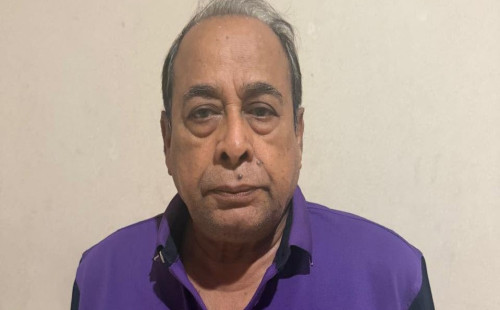
Dhaka Metropolitan Detective Branch (DB) has detained retired Major Md
Mozzaffar Hossain, a convicted fugitive in the assassination case of former
president Ziaur Rahman, after he remained on the run for 45 years.
He was detained
late last night from the Banani DOHS area of the capital, and the matter was
disclosed today (16 July).
According to the
DB, Mozzaffar Hossain had been absconding since being convicted in connection
with the assassination of Ziaur Rahman. Following his detention, he was handed
over to the Bangladesh Army after the completion of legal formalities for
further proceedings under the military justice system.
DB Chief and
Additional Commissioner Mohammad Shafiqul Islam confirmed the development to
The Business Standard.
Investigators
describe Mozzaffar Hossain as one of the key planners of the assassination of
President Ziaur Rahman, who was killed during a military coup attempt in
Chattogram on 30 May 1981.
According to
historical accounts and case-related records, a group of renegade army officers
attacked the Chattogram Circuit House in the early hours of that day, where the
then-president was staying.
Mozzaffar Hossain
and Captain Mosleh Uddin were among the officers who directly took part in the
operation, according to investigators. Various accounts linked to the case
state that Mozzaffar was the first to identify President Ziaur Rahman and open
fire on him.
After the
assassination, he allegedly telephoned the then General Officer Commanding
(GOC) of the 24th Infantry Division in Chattogram, Major General Abul Manzoor,
and informed him, "The President has been killed."
Following a
military crackdown to restore control, several officers were arrested, including
Major General Manzoor, who was later killed. Captain Mosleh Uddin was
subsequently arrested and sentenced to life imprisonment.
However,
Mozzaffar Hossain and Major SM Khaled managed to evade arrest and remained
fugitives.
Sources involved
in the investigation said Mozzaffar spent a prolonged period in hiding in India
and was believed to have stayed there between 1997 and 1998. He later allegedly
used assumed identities and moved across different locations after crossing the
border.
His arrest after
more than four decades marks a significant development in one of Bangladesh's
most high-profile political assassination cases.
Authorities said
further legal proceedings against him will now be conducted through the
Bangladesh Army's judicial process.