Bepza Economic Zone in Mirsarai draws nearly $130m before completion, eyes $2.9b potential

Highlights:
- Bepza Economic Zone attracted $130 million investment before
project completion
- Zone generated $52.82 million exports, creating 5,074 Bangladeshi
jobs
- Sixty-three companies pledged $1.49 billion investment through
land lease agreements
- Zone expanding beyond garments into drones, pharmaceuticals and
advanced manufacturing
- Full operations could attract $2.9 billion and 500,000 jobs
- Gas shortages and limited customs services hinder investment and
operations
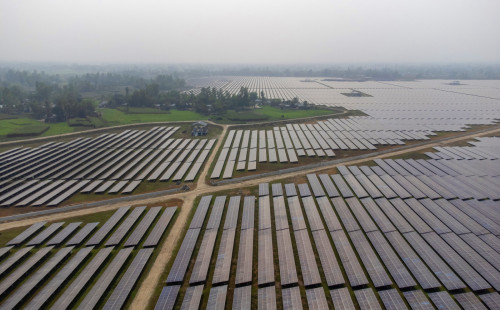
Bepza Economic Zone in Mirsarai,
Chittagong, had attracted $130 million in investment as of mid-July – even
before the site's development project was completed – generating $52.82 million
in exports and creating jobs for 5,074 Bangladeshi citizens, according to the
Bangladesh Export Processing Zones Authority (Bepza).
Bepza officials said the zone has
opened up possibilities for industrialisation, product diversification and
employment. Beyond the traditional ready-made garment sector, it is emerging as
a hub for footwear, high-tech products such as drones, pharmaceutical active
ingredients (API), and a range of eco-friendly and modern goods.
Leases, Investment and project completion
On
16 July, Chinese company Huarun Tex Co Ltd signed a land lease agreement with
Bepza authorities to invest $30 million in a textile manufacturing plant in the
Bepza EZ.
With this, at least 63 local and
foreign companies had signed lease agreements to invest in the zone, with
proposed investment totalling $1.49 billion, Bepza data showed.
12 industrial enterprises have already
begun commercial production and export, while three more have started trial
production and are expected to join full-scale exports soon.
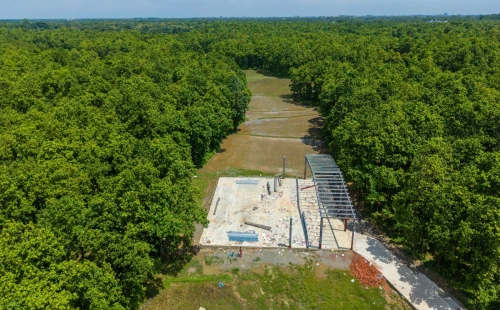
The zone has 539 industrial plots and
two six-storey factory buildings. Of these, 360 plots and one factory building
have already been allocated to 59 enterprises, and most of the total plots have
now been leased out. Several more enterprises are in the pipeline, with 35 to
40 companies in active talks to invest.
The Mirsarai Bepza Economic Zone
establishment project was completed last June. Work began in 2018 at an
estimated cost of Tk1,302.91 crore and was completed after a three-year
extension, ultimately costing Tk163 crore less than budgeted.
Bepza officials said the zone could attract
investment of around $2.9 billion once fully operational. When all enterprises
reach full production capacity, annual export earnings could reach $4 billion
to $5 billion, while creating new employment opportunities for about 500,000
Bangladeshi citizens.
Top exporters and employers
Kaixi Lingerie Bangladesh is the
zone's largest exporter and employer, with an investment of $18.91 million,
cumulative exports of $34.56 million and a workforce of 3,651 Bangladeshis –
more than half of the zone's total employment.
KPST Shoes (BD), the first company to
begin exports from the zone, has invested $5.63 million, exported $9.1 million
worth of footwear accessories and employs 220 workers. Mingda (Bangladesh) New
Material Company has invested $4.48 million, exported $2.7 million worth of
textiles, bags and hospital supplies, and created 147 jobs.
Fengqun Composite Material Company has
exceeded its investment performance, exporting $3.09 million against an
investment of $2.21 million while employing 46 people.
Jibin Technology (BD), Taisheng
(Bangladesh) Webbing Company, Vernon & Oliver Furniture and Goodwood
(Dhaka) have also contributed through exports of footwear accessories,
furniture and medical products, generating hundreds of additional jobs.
Investment from various countries
Investment proposals from the 62
leaseholding companies underscore strong foreign interest in the Bepza Economic
Zone, with China emerging as the largest source of planned investment.
Chinese firms include Alpen Banyan
Garments BD, proposing $108.99 million, Mingda (Bangladesh) New Material with
$76.41 million for textiles and hospital products, Kaixi Lingerie Bangladesh
with $60.85 million for garments, and Tai Ma Shoes (BD) with $55.05 million for
footwear production.
South Korea is another major investor,
led by Park Handbag BD, which plans to invest $80 million in handbags,
backpacks and garments.
Hong Kong (China) has also committed
significant investment, with Campvalley Chittagong proposing $54 million for
camping equipment and garments, while Nova Intima Limited, a Hong Kong-British
Virgin Islands joint venture, plans $28.05 million for women's apparel.
Sri Lanka's Univogue Garments has
proposed $36.49 million for large-scale ready-made garment production.
Arrival of high technology
Four enterprises in high-tech and
non-traditional sectors are investing in the zone, Bepza said.
Chinese-owned AeroSynth Limited has
proposed a $3.50 million investment to manufacture drones, including toy drones
for entertainment, specialised fishing drones, and lightweight delivery drones.
The project is expected to diversify
Bangladesh's export basket and strengthen technology-driven manufacturing.
Chinese company Crescent Hi Tech
Company has begun work to domestically produce sensitive, import-dependent raw
materials for the pharmaceutical sector, signing a lease agreement with a
proposed investment of $7.6 million to produce key raw materials for
internationally standard, life-saving medicines – an initiative expected to
reduce the pharmaceutical industry's reliance on imports.
Chinese company Bangladesh Prothoma
Power Supply Limited has proposed a $12.24 million investment to produce
specialised battery plates, a key component for the electronics and energy
sectors.
Bayexp International, backed by
leading United States investment, has proposed a diversified $15 million
investment to tap the international outdoor and adventure lifestyle market.
Quality over quantity: Bepza's strategy
Investment inflows into the Bangladesh
Export Processing Zones Authority (Bepza) remain strong despite a challenging
investment climate, said Md Tanvir Hossain, member (investment promotion).
He said Bepza is focusing on quality
investment and developing backward linkage industries. "When a shoe
factory is established, we also try to attract manufacturers of soles, laces
and other components so a complete supply chain develops and production costs
come down," he said.
Beyond ready-made garments, Bepza is
targeting export-oriented sectors such as light engineering. Xiao Hongxi,
managing director of Kaixi Lingerie Bangladesh Co Ltd, said the company exports
lingerie and related accessories worth around $3 million annually to Europe,
citing Bangladesh's competitive workforce, duty-free market access and
incentives while calling for better logistics, reliable energy and industrial
diversification.
Gas shortage hampers operation
Despite 15 enterprises already
exporting from the zone, inadequate gas supply continues to delay full-scale
operations.
At a steering committee meeting on the
Bepza Economic Zone project on June 30, authorities stressed the urgent need
for gas connections, directing Bepza to coordinate closely with the Bangladesh
Economic Zones Authority to expedite supply.
"If we had gas, we could attract
nearly double the investment we currently have," said Bepza Member
(Investment Promotion) Md Tanvir Hossain. He also noted that many customs
services remain unavailable within the zone, forcing investors to obtain bond
registrations and import-export approvals outside the EPZ, increasing time and
costs.