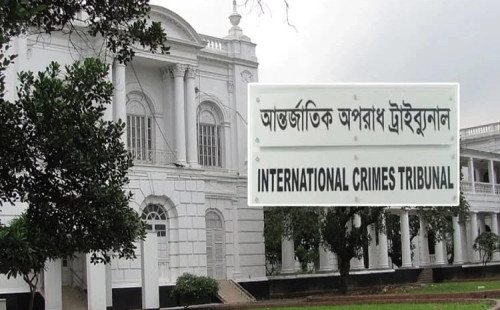
Rampura-Banasree crackdown part of 'state policy' to suppress July Uprising: ICT
Highlights:
- Tribunal holds three senior officers responsible
for two killings and two attempted killings.
- Three former senior police officials sentenced to
death in crimes against humanity case.
- Verdict says protesters were unarmed and police
were instructed to use 'maximum force.'
The attacks on unarmed
protesters in the capital's Rampura and Banasree during the 2024 July Uprising
were part of a large-scale and systematic assault on civilians carried out
under a state policy to suppress the movement, according to the International
Crimes Tribunal (ICT).
The observation was made in the
147-page full verdict, published today (16 July), in the crimes against
humanity case over the Rampura-Banasree violence.
On
28 June, the ICT-1 bench headed by Justice Md Golam Mortuza Mozumder delivered
the verdict, sentencing former Dhaka Metropolitan Police commissioner Habibur
Rahman, former additional deputy commissioner (Khilgaon Zone) Md Rashedul
Islam, and former Rampura Police Station officer-in-charge Md Mashiur Rahman to
death.
Among
other accused, former Rampura police sub-inspector Tarikul Islam Bhuiyan was
sentenced to life imprisonment, while former assistant sub-inspector at Rampura
Police Outpost Chanchal Chandra Sarkar received 20 years in prison.
According
to the verdict, the attacks in Rampura and Banasree formed part of a broader
nationwide operation in which law enforcers used lethal force following
instructions to apply "maximum force" against protesters.
The
tribunal also said the incidents were part of a widespread and organised attack
on civilians "carried out by state forces" alongside members of the
then-ruling Awami League and its affiliated organisations.
The
verdict identified Mashiur, then officer-in-charge of Rampura Police Station,
as the officer who led the operation in the Rampura-Banasree area.
It
said Md Nadim Hossain and Maya Islam were killed, while Amir Hossain and Basit
Khan Musa sustained critical injuries during the attacks.
According
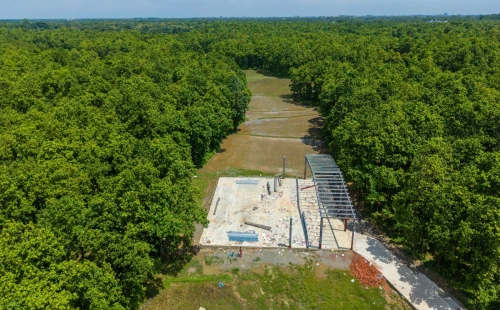
to the tribunal, on 19 July 2024, police shot Amir while he was hanging from the
ledge of an under-construction building in Rampura, leaving him critically
injured.
The
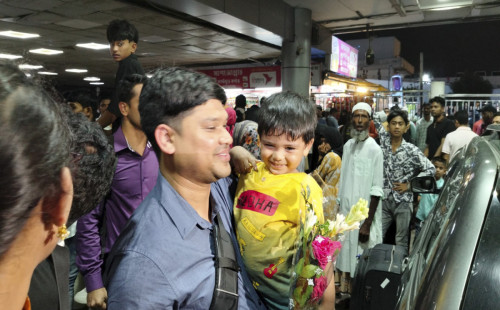
verdict mentioned that Maya and her seven-year-old grandson Basit, were also
shot the same day inside the collapsible gate of their house in Banasree. Maya
later died, while Basit survived with serious injuries.
Nadim
was also killed in police firing in Rampura on the same day, the tribunal said.
The
tribunal found that the prosecution had proved the protesting students and
other civilians were unarmed.
According
to the verdict, Habibur, then DMP commissioner, instructed officers under his
command through wireless messages not to hesitate to use maximum force against
protesters.
It
said police later shot Nadim dead in front of Banasree Mosque after Friday
prayers on 19 July.
The
tribunal further found that Tarikul and Chanchal shot Amir while he was hanging
from iron rods on the ledge of the under-construction building.
The
tribunal held Habibur, Rashedul and Mashiur responsible for the killings of
Nadim and Maya, as well as for the serious injuries suffered by Basit and Amir.
It
said each of the three charges against the three senior officers warranted the
maximum punishment given the gravity of the crimes, but imposed a single
consolidated death sentence on each.
The
verdict noted that Tarikul and Chanchal were lower-ranking officers and that
Amir survived the shooting. It said these factors justified comparatively lighter
sentences.