Leaders from over 100 countries arrive in Tehran as Khamenei funeral gets underway
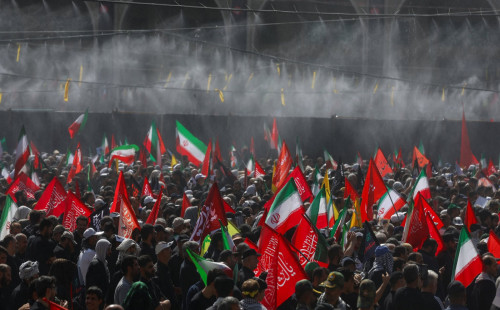
Representatives from more than 100 countries are expected
to attend the funeral of former Iranian Supreme Leader Ali Khamenei, which
began in Tehran on Friday (3 July), according to Iranian state-linked
broadcaster IRIB, Al Jazeera reported.
Khamenei, 86, was killed in a joint
United States-Israeli air strike on his compound on 28 February, the first day
of the US-Israel war on Iran.
The funeral, originally scheduled
for March, was postponed as the conflict continued. The main state ceremony on
Saturday (4 July) is expected to draw the largest gathering of foreign
dignitaries, with funeral rites and public processions continuing across Iran
and Iraq over the next seven days.
Among those attending are several heads of state and government, including
Pakistani Prime Minister Shehbaz Sharif. Pakistan's Ministry of Foreign Affairs
confirmed his visit on Thursday.
Pakistan has played a key
diplomatic role during the conflict, helping broker the April ceasefire between
the US and Iran before facilitating a memorandum of understanding in June that
now forms the basis for broader negotiations aimed at ending the war.
Pakistan's Chief of Army Staff
Field Marshal Asim Munir and Interior Minister Mohsin Naqvi also arrived in
Tehran on Friday to attend the ceremonies.
Tajik President Emomali Rahmon,
Armenian Prime Minister Nikol Pashinyan and Georgian President Mikheil
Kavelashvili are also expected to attend Friday's commemoration.
Several countries are sending
senior government officials instead of their heads of state.
Turkiye will be represented by Vice
President Cevdet Yilmaz.
India has announced that Minister
of State for External Affairs Pabitra Margherita and Bihar Governor Syed Ata Hasnain
will attend the funeral. Hasnain, a former lieutenant general in the Indian
Army, is the seniormost Shia currently holding public office in India. Former
foreign minister Salman Khurshid and opposition leader Mehbooba Mufti are also
part of the Indian delegation.
China will send He Wei, vice
chairperson of the Standing Committee of the National People's Congress, while
Russia will be represented by Security Council Deputy Chairman Dmitry Medvedev,
a former president and prime minister.
Iran's Foreign Ministry confirmed
that Afghanistan's acting Foreign Minister Amir Khan Muttaqi arrived in Tehran
on Thursday for the funeral. Afghan media also reported that Deputy Prime
Minister for Economic Affairs Abdul Ghani Baradar would attend.
Bangladesh will be represented by
Parliament Speaker Hafiz Uddin Ahmed, according to Bangladeshi media reports
citing official notifications.
Following Friday's ceremony, the
public will be able to pay their respects at Tehran's Grand Mosalla on Saturday
and Sunday, where Khamenei's coffin, along with those of several members of his
family, will lie in state.
The funeral procession will then
move to the Iranian city of Qom on Monday and Tuesday before travelling to
Iraq. An official reception is scheduled at Najaf International Airport on
Wednesday, followed by public processions in Najaf and Karbala.
The body will return to Iran for
burial at the shrine of Imam Reza in Mashhad next Friday. Mashhad is also
Khamenei's birthplace.
Iranian authorities expect the
funeral to become one of the largest public commemorations in modern history,
surpassing the estimated 10 million mourners who attended the funeral of former
Supreme Leader Ayatollah Ruhollah Khomeini in 1989.
Mojtaba Khamenei, Iran's current
supreme leader and son of Ali Khamenei, will not attend the funeral because of
security concerns, according to his representative in India. The decision
follows what Iranian officials described as recent Israeli threats against him.
Ahead of the funeral, Ali
Abdollahi, commander of Iran's Khatam al-Anbiya Central Headquarters, warned
the United States and Israel against any attack during the ceremonies.
"We warn the enemies of Iran,
especially the US and the Zionist regime, to avoid any miscalculation and to
think about the harsh retaliation our armed forces would make to any threat and
aggression against our country," he said in a statement carried by Iranian
state media.