'Free, fair and reciprocal': Ambassador Christensen outlines US trade vision for Bangladesh
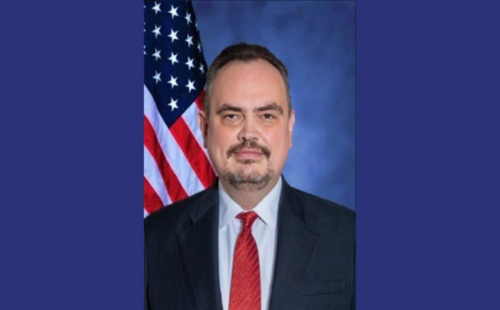
The United States reaffirmed its commitment to "free,
fair, and reciprocal" trade with Bangladesh, says US Ambassador to
Bangladesh Brent T Christensen, adding that a recently signed trade framework
reflected Washington's long-term confidence in the country's economy and
business environment.
Speaking in an interview with
Jamuna TV ahead of US Independence Day celebrations, Christensen said commercial
diplomacy remained a central focus of US policy towards Bangladesh and pointed
to trade reforms as a key element of expanding bilateral ties.
"President Trump believes
trade should be free, fair, and reciprocal," Christensen said, referring
to a February message from Donald Trump to Bangladesh's prime minister.
The United States is Bangladesh's largest export market for ready-made
garments, though Christensen said the trading relationship had been uneven.
"Currently, the US is the
largest market for Bangladesh's RMG, but Bangladesh has historically not bought
a lot from the US. This is not a sustainable reciprocal relationship," he
said.
Christensen said Bangladesh was
among the first countries under the current US administration to sign a
reciprocal trade agreement, or ART, which he described as a framework intended
to support economic reforms and improve market conditions.
"This agreement is a 'bet on
the future of Bangladesh' and outlines steps for removing tariff and non-tariff
barriers and implementing reforms like transparent customs and labour
reforms," he said.
The ambassador said the agreement
was designed to improve the investment climate and align Bangladesh more
closely with international standards.
"Regarding perceptions that
the agreement is unfair, many critics haven't read it," Christensen said.
"The ART gives a framework to improve a business environment that has
historically been hard for foreign investors. It commits Bangladesh to
international standards, such as removing unique import and testing
requirements that exist nowhere else."
Christensen also emphasised the
role of US exports in supporting Bangladesh's economic development,
particularly in agriculture and energy.
He said purchasing decisions should
focus on "best value", citing US wheat supplies with lower spoilage
rates and higher protein content than some previous imports.
The ambassador also highlighted
recent and existing US business involvement in Bangladesh, including a commitment
by Boeing aircraft for fleet expansion and energy investments from Chevron,
Excelerate Energy and GE Vernova.
"In energy, Chevron is the
largest US investor, providing over 60% of Bangladesh's domestic
production," Christensen said, adding that Bangladesh would require
substantial long-term investment to meet future energy demand.
While trade was a major focus,
Christensen said broader cooperation in health, technology and defence would
remain part of the bilateral agenda.
He also reiterated US support for
Bangladesh over the Rohingya refugee crisis, saying Washington remained
committed to diplomatic efforts aimed at creating conditions for their return
to Myanmar.
Looking ahead, Christensen said he
saw room for stronger ties between the two countries.
"I am very optimistic about
the future of US-Bangladesh relations based on our trade agreement, health
work, and people-to-people ties," he said.