ICT sentences Inu to 10 years in crimes against humanity case
Highlights
- Case involves killing
of six people in Kushtia
- Tribunal found Inu
guilty after lengthy trial proceedings
- Prosecution brought
eight crimes against humanity charges
- Defence denied Inu's
involvement and presence in Kushtia
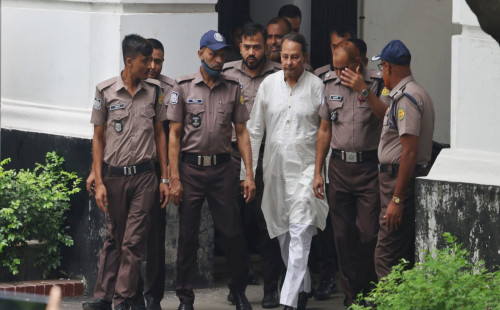
The International Crimes Tribunal (ICT) today (30 June)
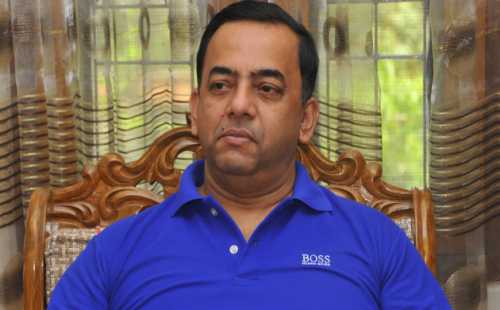
sentenced Jatiya Samajtantrik Dal (JSD) President and former minister Hasanul
Haq Inu to 10 years' imprisonment after convicting him in a crimes against
humanity case over his role in the killing of six people and other offences
committed during the July uprising in Kushtia.
The verdict was announced at 2:30pm
by a three-member bench of ICT-2 headed by Justice Nazrul Islam Chowdhury.
The proceedings will be broadcast live by Bangladesh Television (BTV), subject
to the tribunal's permission.
On 14 May, after concluding final
arguments from both the prosecution and the defence, the tribunal kept the case
under curia advisari vault (CAV), meaning the judgment was reserved for a later
date.
The prosecution was represented by
prosecutors Faruk Ahmad, Moinul Karim, Abdus Sobhan Tarafdar, and others, while
senior lawyer Monsurul Haque Chowdhury led the defence.
The defence presented arguments
over nine days, contending that Inu was not a member of parliament during the
July Uprising and had no involvement in the killings in Kushtia.
According to the defence,
prosecution witnesses also acknowledged that Inu was not present in Kushtia
when the killings took place.
The tribunal received the
investigation report against Inu on 11 September, 2025. Testimony began on 30
November with 10 prosecution witnesses and two defence witnesses examined
during the trial.
On 5 August, 2024, six people-
worker Ashraful Islam, Suruj Ali Babu, student Abdullah Al Mustakin, Usama,
businessman Bablu Farazi, and employee Yusuf Sheikh were killed when police
allegedly opened fire on student protesters and civilians at different
locations in Kushtia town. Many others were also injured.
According to the prosecution, the
formal charges against Hasanul Haq Inu comprise eight allegations of crimes
against humanity linked to the suppression of the July Uprising.
Prosecutors allege that on 18 July
2024, Inu, as president of JSD, a key ally of the then-ruling 14-party
alliance, gave an interview to the Mumbai-based Indian television channel
Mirror Now, where he described the protesters as BNP, Jamaat, terrorists and
communal elements.
The prosecution claims the remarks
were intended to delegitimise the movement and incite the use of force against
demonstrators.
The prosecution further alleges
that on 19 July, 2024, Inu attended a meeting of the 14-party alliance at
Ganabhaban chaired by then-prime minister Sheikh Hasina.
During the meeting, prosecutors
claim, a decision was taken to deploy the military nationwide and order
security forces to open fire on unarmed participants of the quota reform and
Anti-Discrimination Student Movement.
Inu is accused of taking part in
the decision-making process and of instigating, aiding, and facilitating its
implementation.
Prosecutors also allege that on 20
July, 2024, Inu telephoned the superintendent of police in his home district of
Kushtia and instructed the officer to identify protesters from photographs,
prepare lists of participants and take action against them.
The prosecution further claims that
Inu maintained regular communication with Sheikh Hasina throughout the movement
and was involved in planning and conspiring to suppress the protests through
the use of lethal weapons, deployment of armed groups, helicopter attacks,
arrests and torture.
Prosecutors allege that he advised
and encouraged such measures.
The charges also state that during
an interview with News24 on 17 July, 2024, Inu again labelled protesters as
BNP, Jamaat, terrorists, militants and communal forces in an effort to
discredit the movement.
He is further accused of endorsing
the imposition of curfew and supporting the government's use of lethal force,
killings and repression against protesters.
Prosecutors further allege that Inu
attended another 14-party alliance meeting chaired by Sheikh Hasina on 29 July,
2024, where he repeated his characterisation of the protesters as BNP, Jamaat,
terrorists and communal elements.
He is also accused of proposing a
ban on Jamaat-e-Islami, which, according to the prosecution, helped legitimise
the killings and repression carried out by law enforcement agencies and armed
activists of the ruling alliance.
The prosecution also alleges that
on 4 August, 2024, Inu endorsed the government's decision to impose a curfew
and use live ammunition against protesters.
He is further accused of conspiring
with Sheikh Hasina over the phone to implement those measures and directing
leaders and activists of his party accordingly.
Finally, prosecutors allege that on
5 August, 2024, acting on a conspiracy and directives involving Sheikh Hasina,
Hasanul Haq Inu and former Awami League Joint General Secretary Mahbub Ul Alam
Hanif, Awami League activists, affiliated organisations and police opened fire
on unarmed student protesters and civilians at various locations in Kushtia
town.
The prosecution says the shootings
killed six people- Ashraful Islam, Suruj Ali Babu, Abdullah Al Mustakin, Md
Usama, Bablu Farazi and Yusuf Sheikh.