Which European countries are running out of water?
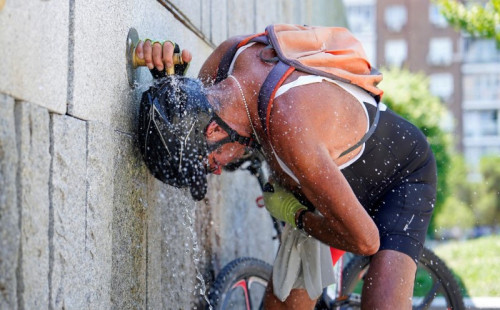
Water stress across parts of the European Union is reaching
critical levels despite the bloc's relatively low average freshwater usage
rate, with Mediterranean countries facing the greatest pressure during peak
summer months.
The European Union's overall
freshwater usage rate stands at 5.8%, but regional disparities are significant.
A country enters a "warning zone" when it uses 20% of its available
freshwater resources, according to the data, says Euro News.
Several southern European countries
exceed that threshold during the summer period. Cyprus operates in what has
been described as a "constant emergency," using 72% of its freshwater
resources annually and up to 92% during summer months. Malta reaches a summer
water stress level of 67%.
Other countries also record elevated levels during peak seasonal demand,
including Greece at 37%, Romania at 34%, Portugal at 31%, Italy at 27%, and
Spain at 26.5%.
Access to clean water remains a
challenge for some residents across the bloc. Approximately one in 10 European
Union citizens struggles to access safe and clean water, though the causes
differ among countries.
In some cases, access problems are
linked directly to resource scarcity. Cyprus and Greece illustrate this
pattern, with poor access affecting 36.5% and 31.5% of residents respectively,
alongside high levels of resource exploitation.
In other countries, including
Bulgaria, Hungary, Croatia and Ireland, access problems are attributed to
ageing infrastructure and failures in supply systems rather than shortages of
available water resources. These countries maintain relatively low exploitation
rates despite facing difficulties in water delivery.
By contrast, France, Portugal and
Spain have maintained water access issues below the European Union average of
9%, suggesting that distribution systems may help limit the impact of
environmental pressures.
The issue is being driven by
multiple factors, including climate change and drought, both of which are
expected to intensify water shortages through at least 2030.
In Cyprus, rapid population growth
has added pressure on available resources. Authorities have responded by
installing desalination plants aimed at meeting drinking water demand from both
residents and tourists.