Floodwaters recede but erosion worsens along Teesta, 20,000 families stranded
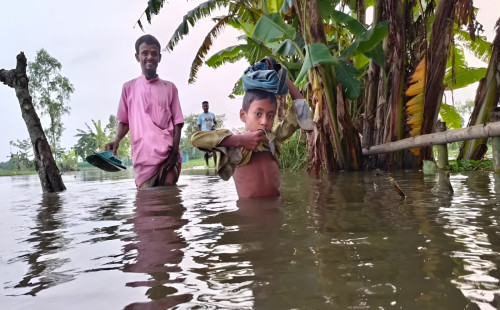
Although water levels of the Teesta River have started
receding thousands of people in northern Bangladesh remained stranded while
fresh riverbank erosion is threatening homes, roads, embankments and critical
infrastructure in five districts.
At least 20,000 families are still
marooned in low-lying and char areas of Rangpur, Lalmonirhat, Kurigram,
Gaibandha and Nilphamari as floodwaters from the Teesta, Dharla and Dudhkumar
rivers continue to fluctuate, according to Bangladesh Water Development Board (BWDB)
officials.
Riverbank erosion has intensified
in several areas, displacing dozens of families and putting key flood
protection structures and roads at risk.
BWDB Superintending Engineer for Rangpur region Ahsan Habib said at least 65
families have already lost their homes to river erosion over the past two days
across the five northern districts.
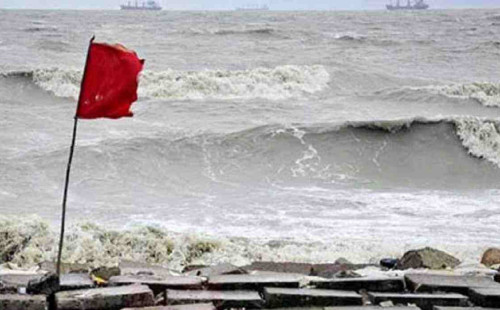
He also said water levels could
rise again over the next few days, prompting authorities to use loudspeakers to
alert residents in vulnerable char areas to remain prepared.
According to the Flood Forecasting
and Warning Centre, heavy to very heavy rainfall is expected over the next two
days in Rangpur Division and upstream areas in India's West Bengal, followed by
moderate to heavy rainfall for another three days.
BWDB officials said the Teesta
River may rise again and flow above the danger level within the next three
days.
Earlier this season, the Teesta
first crossed the danger mark on June 23 before receding the following day.
Water levels rose above the danger level again on June 29.
In Rangpur's Gangachara upazila,
strong currents have damaged the Teesta Bridge protection embankment and groynes
built along the river's right bank.
Floodwaters have inundated vast
low-lying areas of Kolkonda and Lakkhitari unions, leaving many families
stranded and cutting off communication with char villages.
Jute fields, groundnut farms and
Aman seedbeds have gone underwater.
Severe erosion has also been
reported along the Teesta in Lalmonirhat and Kurigram, while the Dharla and
Dudhkumar rivers continue to erode riverbanks, forcing riverside residents into
uncertainty.
Local residents said nearly 150
metres of a bridge protection embankment at Mahipur have already been washed
away.
The erosion now threatens the
Second Teesta Road Bridge, the Rangpur-Kakina regional highway and thousands of
nearby homes.
Road sections approaching the
bridge have developed large cracks, sinkholes and subsidence, creating risks
for commuters and vehicles.
Upazila Engineer Shah Md Obaidur
Rahman said officials have been instructed to inspect the damage and repair
work would begin as soon as possible.
Hundreds of homes, educational institutions,
rural roads and cropland across the five districts remain under knee-deep
water.
Residents say they are struggling
with shortages of food, safe drinking water and livestock feed, while farmers
fear extensive damage to Aman rice seedbeds and vegetable fields.
Additional Director of the
Department of Agricultural Extension in the Rangpur region Sirajul Islam said
preliminary estimates show that floodwaters have inundated about 320 hectares
of Aman paddy, eight hectares of black gram, 860 hectares of seed groundnuts
and 790 hectares of vegetable fields.
A detailed assessment of crop
losses is being prepared, he added.
Abdul Halim, a farmer from Char
Shankardah village, said the water had risen overnight, submerging
homes."Now the water is receding, but we're worried about river
erosion," he said.
Rahima Begum, who has taken shelter
in a flood shelter, said she was struggling to care for her children and
livestock after floodwater entered her house.
"We have not received any
relief yet," she said.
Farmer Salam Uddin of Kolkonda said
his one-and-a-half acres of farmland remained underwater."We're also
facing a shortage of cattle feed, and our Aman seedbeds may be destroyed,"
he said.
In Kaunia upazila, residents of
riverside char villages said they remained on alert as water levels continued
to fluctuate.
Meanwhile, in Kurigram's Ulipur and
Nageshwari upazilas, about 200 metres of flood protection embankment have
reportedly been washed away by the Teesta's strong current.
Across the river from Baraibari
ferry ghat in Gangachara stands a nearly seven-kilometre earthen embankment
built not by the government but by local villagers through donations and
voluntary labour.
For the past three years, the
embankment has protected nearly 12,000 families in five villages from flooding.
Now, rising water and strong
currents have begun eroding sections of the structure, raising fears that if a
supporting embankment collapses, the main embankment may also fail.
Local residents said they built the
embankment themselves after repeated appeals to the Water Development Board for
permanent protection went unanswered following devastating floods three years
ago.
The BWDB has placed around 200
geo-bags along vulnerable sections in an effort to slow the erosion.
Local representatives criticised
what they described as delayed preventive measures.
Lakkhitari Union Parishad Chairman
Abdullah Al Hadi said timely placement of geo-bags could have prevented much of
the current damage.
He said bamboo piling installed
earlier as a temporary protection measure had collapsed during the first strong
flow of the monsoon, rendering a project worth around Tk 1.4 million
ineffective.
Balapara Union Parishad Chairman
Ansar Ali warned that if upstream flows continue to increase, more riverside
villages could be flooded.
Rangpur Divisional Commissioner
Shahidul Islam said the administration was closely monitoring the situation.
He said authorities were preparing
lists of affected families and relief assistance would begin shortly.
Local residents, however, say emergency
relief alone will not solve the recurring crisis.
They are demanding permanent
rehabilitation of erosion victims and long-term river management projects to
protect communities along the Teesta from repeated floods and riverbank
erosion.