Bangladesh migrants face uncertainty as Middle East war disrupts jobs, wages: RMMRU
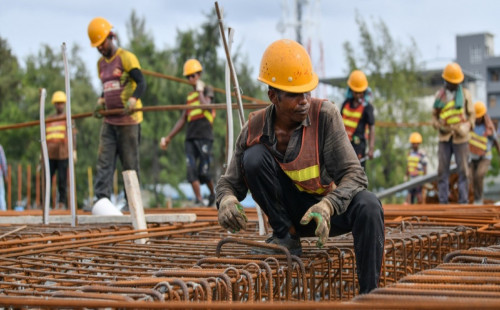
Bangladeshi migrant workers in the Gulf are facing growing uncertainty over jobs, safety and future migration prospects due to the ongoing Middle East war.
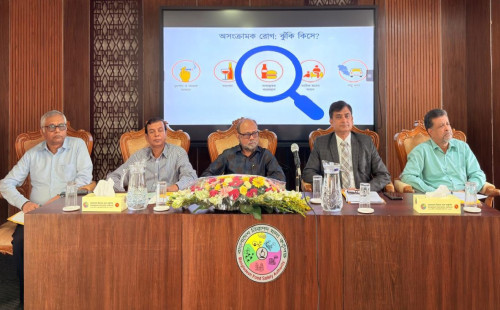
Researchers and migration experts warned about the situation at a press conference organised by the Refugee and Migratory Movements Research Unit (RMMRU) at the National Press Club today (13 May).
The organisation said the prolonged conflict could trigger widespread instability in the Gulf labour market, threatening employment opportunities for lakhs of Bangladeshi workers.
"Due to the war, outgoing worker flow already decreased by 50% in March compared to the same month last year," RMMRU said citing Bureau of Manpower Employment and Training (BMET) data.
"At least 5,000 Bangladeshi workers lost jobs in Lebanon. Saudi companies have reduced their workforce. Since the war began, workers are facing wage cuts, wage theft and rising inflation in the Gulf," said Dr Mohammad Rashed Alam Bhuiyan, associate professor of Political Science at the University of Dhaka.
He also said at least 11 Bangladeshi nationals have been killed in Gulf countries due to the conflict.
She urged the expatriate welfare ministry to allocate budgetary resources for war-affected migrants instead of using the Wage Earners' Welfare Board fund, which is formed with workers' contributions.
According to RMMRU, the war has already disrupted business and economic activity across the Gulf.
The uncertainty could affect Saudi Arabia's Vision 2030 mega projects, including NEOM, the Red Sea tourism development and Qiddiya, which were expected to generate long-term jobs for Bangladeshi workers in construction and services.
The organisation warned that declining investor confidence, rising costs or infrastructure damage could eliminate many of the expected job opportunities.
RMMRU also expressed concern over the possible expansion of the conflict to the United Arab Emirates, noting that its involvement alongside the United States and Israel could expose it to retaliatory attacks from Iran.
Such a development could put the lives and livelihoods of nearly two million Bangladeshis in the UAE at risk.
The press conference also highlighted that disruptions in regional transport and air travel have created a "second crisis" in migration recruitment.
"Delays and cancellations in worker deployment are triggering disputes between recruiting agents and aspiring migrant workers over costs and payments."
The organisation said the situation could worsen if the conflict continues.
RMMRU criticised the government for lacking a comprehensive crisis response mechanism, saying there is no dedicated emergency fund for migrant workers affected by the war, including those who lose jobs, are injured or forced to return home.
Dr Mohammad Jalal Uddin Shikder, a migration expert from North South University (NSU), noted the absence of a real-time monitoring dashboard for cancelled flights, stranded migrants and returnee flows from conflict-hit areas.
He also said there is no coordinated response plan, no reintegration programme for returnees from Iran or Gulf countries and no emergency support system for workers who have lost income but remain stranded abroad.
RMMRU raised concerns over domestic workers, describing them as among the most isolated and vulnerable migrant groups, often outside emergency communication networks such as WhatsApp-based crisis support systems.
It also said loan disbursement from Probashi Kallyan Bank has effectively stalled due to mandatory flight ticket requirements.
To address the crisis, the organisation recommended special migrant crisis response cells at Bangladeshi embassies in GCC countries, along with 24/7 Bangla-language hotlines.
It also urged emergency funds for airfare support, cash assistance for returnees from Iran and support for workers affected by job losses and conflict-related disruptions.
It further recommended emergency food, shelter and mental health support for stranded workers, crisis alert systems in Bangla via WhatsApp and SMS and diversification of Bangladesh's overseas labour markets beyond the Gulf in the long term.