Pumpkin boom lifts Rangpur char farmers after early price slump
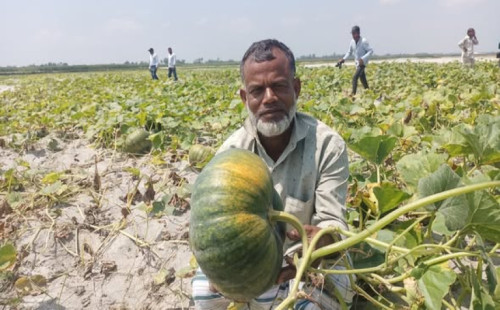
A bumper
sweet pumpkin harvest across northern char areas is now yielding better returns
after an early-season price slump, bringing relief to farmers who expanded
cultivation this year.
Large-scale
farming of the crop has taken place along the Teesta, Brahmaputra, Dudhkumar,
and Dharla rivers, spanning Lalmonirhat, Kurigram, Nilphamari, Rangpur, and
Gaibandha. Favourable weather, low pest attacks, and institutional support
encouraged farmers to bring more land under cultivation.
After
facing low prices in March, rising demand has pushed up returns in recent
weeks. Farmers say production costs range between Tk 7 and Tk 8 per kilogram,
while wholesale prices have climbed to Tk 22–25 and retail prices to Tk 30–35.
According
to the Department of Agricultural Extension (DAE), sweet pumpkin is gaining
popularity as a winter crop in sandy char lands due to its low cost, high
yield, and ease of storage. Many farmers are also cultivating it as a companion
crop.
DAE data
shows that around 11,000 hectares of land in the Rangpur region have been
brought under sweet pumpkin cultivation this season, with a production target
of 240,000 tonnes—about 92 percent of it from char areas.
Field-level
accounts reflect the shift in fortunes.
Azizur
Rahman, 55, of Mohishkhocha in Lalmonirhat’s Aditmari upazila, said he held
back sales at the start of the season due to low prices and is now benefiting
from the rebound.
“This
year, the yield has been very good. I did not sell at the beginning due to low
prices. Now, with higher demand, I am getting better rates,” he said.
He
cultivated pumpkins on 10 bighas of land in the Teesta char. While he sold part
of his produce early at lower prices, he is now selling the rest at Tk 22–25
per kg and expects a substantial profit.
He
cultivated pumpkins on 10 bighas of land in the Teesta river char, spending
around Tk 180,000, and harvested an average of 70 maunds per bigha. Although he
sold 100 maunds at Tk 12 per kg early in the season, he is now selling the rest
at Tk 22–25 per kg and expects to make around Tk 350,000 net profit.
In
Kurigram’s Nageshwari upazila, Habibur Rahman, 60, said rising demand has
turned early disappointment into optimism. “I was worried at the beginning of
the season, but now I expect good profits,” he said, adding that wholesalers
are collecting pumpkins directly from farms and transporting them to southern
districts.
He
cultivated pumpkins on 15 bighas this year -- nearly double from last year --
and expects profit to exceed Tk 500,000, compared to Tk 125,000 from eight
bighas last year.
Farmers,
however, say challenges remain.
Abdar
Hossain, 65, of Gangachara upazila in Rangpur, stressed the need for better
storage and processing facilities. “We produce pumpkins through hard labour in
the char.... If there were proper storage and processing, we could benefit
more,” he said, also calling for reduced transportation costs.
Market
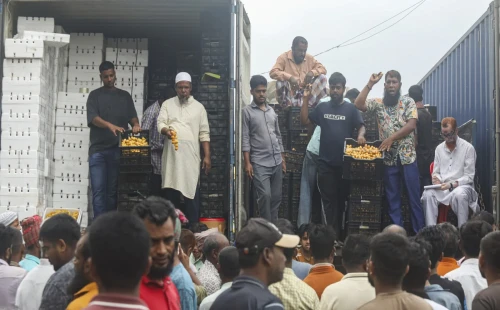
trends echo the same pattern. Visits to local markets in Rangpur show pumpkins
selling at Tk 30–35 per kg, with wholesalers purchasing directly from farmers
and sending consignments to southern parts of the country.
Traders
say demand has increased steadily over the past month, reversing the
early-season slump.
Meanwhile,
non-government organisation RDRS Bangladesh is providing up to Tk 5,000 per
farmer for seeds, fertiliser, and irrigation in char areas, helping expand
cultivation.
Sirajul
Islam, additional director of DAE in Rangpur, said the sandy soil of char lands
is highly suitable for pumpkin farming and interest among farmers has grown in
recent years.
“With
rising cultivation and market demand, sweet pumpkin is contributing positively
to the char economy,” he said.