24,000 die annually in Bangladesh due to high-sodium foods: Experts
An average adult in Bangladesh consumes nearly 9 grams of salt per day,
almost double the maximum limit recommended by the World Health Organization
(WHO). According to health experts, excessive salt intake contributes to nearly
24,000 deaths annually in the country. They said coordinated efforts involving
individuals, food manufacturers, and regulatory authorities could significantly
reduce the risk of heart disease, stroke, and other non-communicable diseases
(NCDs).
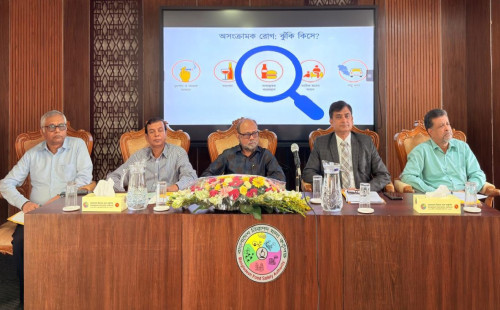
These concerns were highlighted by
speakers at a public awareness seminar held today (13 May) marking World Salt
Awareness Week 2026. The seminar was organised by the Bangladesh Food Safety
Authority with technical support from National Heart Foundation Hospital and
Research Institute.
The seminar was chaired by Md Anwarul
Islam. Delivering the welcome speech, Professor Mohammad Shoeb said that
excessive salt intake is now recognised globally as a major public health
concern. High salt consumption increases blood pressure and significantly
raises the risk of cardiovascular diseases and other NCDs. It also contributes
to unhealthy weight gain and other health complications.
He further stated that reducing salt intake requires greater awareness at the
individual and family levels, alongside stronger efforts from food industries
to reduce salt content in processed foods and produce healthier products. He
also emphasised the importance of effective public health policies, stronger
regulatory frameworks, and coordinated national initiatives.
Dr Ahmad Khairul Abbar said, nearly 71% of
all deaths in Bangladesh are caused by NCDs, while 51% of those deaths occur
prematurely. Excessive salt intake increases the risk of high blood pressure,
heart disease, stroke, kidney disease, and stomach cancer.
He further stated that although one in four
adults in Bangladesh suffers from hypertension, most cases remain uncontrolled.
Excessive salt consumption was identified as one of the leading contributors to
rising hypertension rates.
Samina Israt, Program Officer
(Diet-Related Risk Factors), World Health Organization (WHO), said, In
Bangladesh, the introduction of Front-of-Pack Labelling (FOPL) is a crucial
public health strategy and a WHO-recommended, cost-effective salt reduction
intervention to address the rising burden of diet-related noncommunicable
diseases (NCDs). By providing clear, easily understood nutrition information on
the front of packaged foods, FOPL empowers consumers to make healthier food
choices and encourages the food industry to reformulate products to improve
their nutritional quality. It complements existing nutrient declarations,
supports national nutrition and health policies, and creates an enabling food
environment that promotes healthier dietary behaviors across all population
groups. Furthermore, FOPL facilitates monitoring of consumer behavior and
dietary impact, making it an evidence-based tool to reduce NCD risk and improve
overall public health outcomes in Bangladesh.
Professor Sohel Reza Choudhury expressed concern over "hidden salt"
in processed and packaged foods. He said foods such as chips, chanachur,
instant noodles, pickles, soups, and biscuits often contain high levels of
salt. Even many sweet-tasting foods may contain excessive sodium, which remains
unknown to most consumers. As a result, people unknowingly consume salt far
beyond the recommended limit. He stressed the need for mandatory front-of-pack
warning labels, reformulation of processed foods, and stronger educational
campaigns to address the issue effectively.
Professor Md Saidul Arefin said the
consumption of processed foods is increasing at an alarming rate in Bangladesh.
The growing popularity of packaged foods among children, adolescents, and
adults could further increase the burden of NCDs in the future. He emphasised
the importance of creating healthy food environments in schools, hospitals, and
workplaces through comprehensive policies promoting low-salt foods and
healthier eating habits from an early age.
In his remarks, Faruk Ahmed said
excessive salt intake has become a silent public health threat in Bangladesh.
The excessive use of salt in food is increasing the risk of hypertension, heart
disease, and stroke, often without people realising it. He particularly
expressed concern over the high salt content in processed and packaged foods
and stressed that food manufacturers must act responsibly, alongside raising
public awareness.
He also stated that ensuring safe and
healthy food requires clear nutrition information on food packaging and
effective implementation of food labelling systems. He emphasised that the
government and all relevant stakeholders must work together to strengthen
public awareness, improve food labelling mechanisms, and promote healthier
dietary habits.
The seminar also provided several
practical recommendations for reducing salt intake, including using less salt
in cooking, avoiding additional table salt with meals, reducing processed food
consumption, limiting sauces and pickles, and checking nutrition information
before purchasing packaged foods.
Speakers concluded that individual
awareness alone is not enough to control NCDs. Coordinated efforts involving
the government, food manufacturers, the health sector, educational
institutions, and the media are essential. They called for setting maximum salt
limits in processed foods, introducing mandatory front-of-pack warning labels,
and strengthening nationwide public awareness campaigns.
The seminar, held under the theme
"Let's Reduce Salt in Our Food Together," was attended by public
health experts, physicians, nutritionists, researchers, academics,
representatives from government and private organisations, and media
professionals.