2 unregulated toxic chemicals in plastic pose health risk
A
situation report has raised concerns over widespread exposure to harmful
chemicals phthalates and bisphenols, putting public health at significant risk
as their use remains largely unregulated in the country.
Phthalates
and bisphenols are widely used to make plastics flexible and durable, but they
are classified as endocrine-disrupting chemicals that can interfere with
hormonal balance and are linked to reproductive disorders, developmental
abnormalities and cancer, the report said.
The report
recommends urgent policy action, including restricting the high-risk additives
in consumer products, developing chemical-specific regulations, and introducing
mandatory labelling and disclosure systems.
“It would
be very dangerous if we ignore the issue of highly toxic additives,” said
Siddika Sultana, executive director of the Environment and Social Development
Organisation (ESDO).
They pose
serious risks, particularly for children and women of reproductive age, but
existing laws do not address this, she said.
The ESDO
prepared the report as part of a global initiative led by the International
Pollutants Elimination Network, which was presented by its assistant programme
officer Sadmeen Sadaf Jahan at an event yesterday.
Currently,
Bangladesh produces more than 3 million tonnes of plastic annually, with a
domestic market valued at more than $ 3 billion and an annual growth rate of
approximately 20 percent.
Public and
policy discussions have largely focused on visible plastic pollution.
The
chemical composition of plastics, particularly the use of hazardous additives
such as phthalates and bisphenols as plasticisers, remains a critical but
underexplored issue.
Besides,
the industry is heavily reliant on imported raw materials and chemical
additives, she said, adding that around 15 shipments of Bisphenol A (BPA) were
imported in 2025.
The
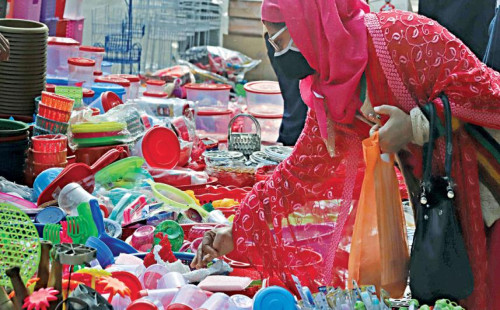
chemicals are widely used across multiple sectors, including food packaging and
plastic containers, children’s toys and school supplies, thermal paper
receipts, flexible PVC products and adhesives, coatings and printing inks.
Children
are vulnerable to chemical exposure due to frequent contact with toys and
school supplies.
Retail
workers are also exposed to continuous handling of BPA-containing receipts,
while communities in industrial areas are exposed through polluted water, air
and food.
Citing a
2023 study by Jahangirnagar University students and teachers, she said
industrial areas such as Savar and Tongi found significant concentrations of
phthalates, posing ecological and carcinogenic risks.
In 2022,
an ESDO study found 30 out of 47 erasers used by schoolchildren contained
phthalates, she said.
A joint
study by ESDO and the Wonjin Institute in 2022 analysed 39 thermal paper
receipts collected from various retail outlets in Dhaka and found BPA in 67.5
of samples.
ESDO
Secretary General Shahriar Hossain said the plastics sector is growing rapidly,
but chemical safety governance has not kept pace.
Without
urgent action, hazardous additives will continue to threaten public health,
workers and the environment, he said.
People’s
consumption of foods exposed to different chemicals is one of the reasons
behind the rise in non-communicable diseases in the country, said Tahmina
Shirin, director of the Institute of Epidemiology, Disease Control and
Research.
Referring
to the study, she said the evidence generated in the study should be
incorporated into the government’s policy.
The report
should serve as a wake-up call for policymakers, said ESDO President Syed
Marghub Murshed.
Bangladesh
now has an opportunity to build a modern regulatory framework that safeguards
health while supporting responsible industrial development, he added.