As subsidies rise, govt faces mounting pressure to mobilise funds
The government is facing growing
uncertainty over how to mobilise funds to meet mounting expenditure pressures
as a surge in global fuel prices threatens to widen the fiscal gap in the
upcoming budget.
Officials at the finance division say the cost of
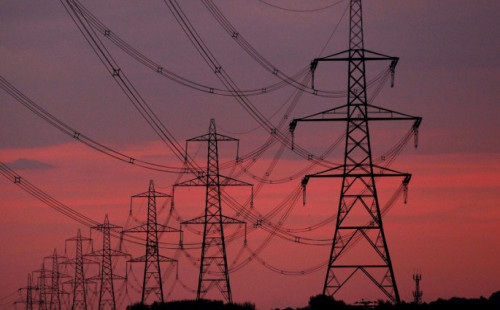
subsidies in the power and energy sectors alone could approach Tk1 lakh crore
annually, driven by nearly doubled oil and gas prices in international markets
amid the Middle East war.
Additional pressure is seen from increased subsidies in
agriculture and fertiliser alongside spending commitments linked to the
government's election pledges.
However, revenue mobilisation prospects
remain weak due to sluggish economic activity, raising concerns over how the
government will bridge the widening gap between income and cost.
Against this backdrop, the government's coordination
council is set to meet tomorrow to review the overall situation, identify risks
and outline strategies for the next fiscal year's budget.
Finance ministry officials said they had initially begun
work on a budget of around Tk8.8 lakh crore to Tk9 lakh crore for FY2026,
expecting a post-election rebound in investment and employment.
But the overall global situation has forced a
reassessment as rising energy costs squeeze fiscal space while revenue growth
remains constrained.
Officials are now considering a contractionary budget, with the size likely to
be between Tk8.5 lakh crore and Tk8.6 lakh crore.
The government is expected to set a revenue target of
around Tk6 lakh crore for the next FY, including approximately Tk5.3 lakh crore
from the National Board of Revenue. However, concerns persist over the
feasibility of this target.
The Centre for Policy Dialogue has already warned that
NBR collections in the current FY may fall short of the target by about Tk1
lakh crore.
"Global economic uncertainty and structural
weaknesses in revenue mobilisation have made it increasingly difficult to
balance income and expenditure while delivering on election promises," a
senior finance ministry official said.
He also said that the final budget size could be revised
upward, potentially reaching Tk9 lakh crore, depending on the government's
decisions.
The government has set a target of raising GDP growth
from a provisional 3.5% this FY to 5% in the next, alongside efforts to contain
inflation and boost domestic demand.
However, officials remain sceptical about achieving these
targets given global perspectives.
Currently, the government has been managing subsidy
pressures through spending cuts and alternative financing measures. These
include reducing allocations in various sectors, issuing bonds to borrow from
the private sector and utilising funds earmarked for "unforeseen
expenditures."
Recent austerity measures include a ban on government
vehicle purchases and restrictions on foreign travel funded by the state. While
such steps have helped manage additional costs for a few months, officials warn
that sustaining them over a longer period will be challenging.
"If the situation persists, adjustments in fuel and
power prices may become necessary," the finance ministry official said,
cautioning that such moves could further fuel inflation. This, in turn, may
require higher allocations for social safety net programmes to protect
low-income groups.
While initiatives like the "family card"
programme have already been introduced, officials say there is limited scope to
expand new schemes in the next budget. Instead, the focus will be on improving
efficiency and preventing duplication in existing programmes.
Budget support from development partners is feared to
decline sharply, from around $3.5 billion in FY2025 to about $1.2 billion in
the current FY. Inflows may remain just above $1 billion next FY, although an
additional $1.8 billion could come from the IMF under ongoing programmes.