AmCham urges simpler tax system, relaxed procedures to ease business. Here are its proposals for NBR
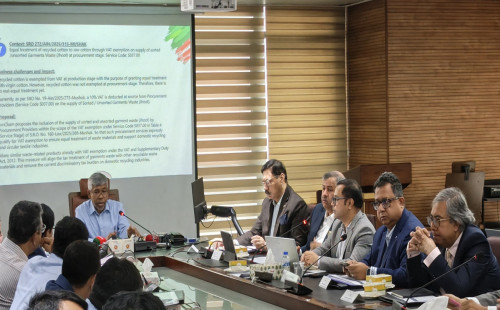
The American Chamber of Commerce in
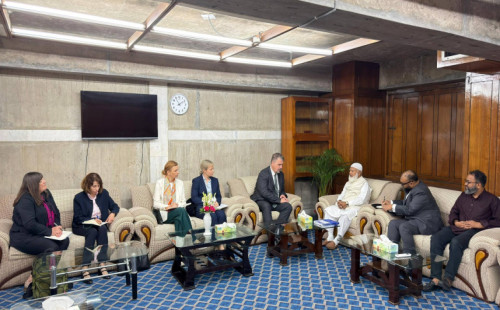
Bangladesh (AmCham) today (5 April) presented its budget recommendations to
National Board of Revenue (NBR) Chairman Md Abdur Rahman Khan, urging a simpler
tax system and relaxed administrative procedures to ease the cost of doing
business.
An AmCham
delegation led by President Syed Ershad Ahmed handed over the budget
recommendations to the NBR chairman.
Ershad said
Bangladesh's revenue structure has not kept pace with the needs of a modern,
investment-driven economy, noting that only about one-third of registered TIN
holders currently file returns.
At the same time, nearly two-thirds of tax
revenue comes from indirect taxes, indicating a heavy reliance on consumption-based
taxation that places a relatively higher burden on ordinary citizens, he added.
Calling the issue
one of fairness, competitiveness and sustainability, he said widening the
direct tax base requires building trust, predictability and simplicity in the
system.
Compliance cannot
be enforced by complexity — it must be encouraged by clarity and confidence, he
said, adding that taxpayers are more willing to participate when the system is
transparent and stable.
In its proposals,
AmCham emphasised the importance of policy predictability, saying investors
need certainty in tax rates, clarity on incentives and confidence in long-term
policy stability. It recommended introducing a structured framework for advance
tax rulings to reduce uncertainty.
The chamber also called for rationalising the tax system by reducing
overlapping taxes, addressing double taxation and revisiting minimum tax
provisions to ease the cost of doing business and improve voluntary compliance.
Administrative
reforms were highlighted as a priority, including simplifying procedures,
reducing unnecessary certifications and strengthening VAT refund mechanisms to
improve efficiency and transparency.
It also welcomed
the planned separation of tax policy and administration.
AmCham underscored
the role of digitalisation, recommending expansion of electronic payments,
promotion of cashless transactions and investment in digital tax infrastructure
to enhance compliance and reduce informality.
It further
stressed the need for trade facilitation and customs modernisation, including
digital clearance systems, transparent valuation and improved port operations
to reduce business costs and strengthen competitiveness.
As Bangladesh
prepares for LDC graduation, the chamber called for measures to support export
sectors, including faster VAT refunds, more efficient supply chains and
accelerated trade agreements.
AmCham also
recommended strengthening the financial sector and capital market through
supportive tax policies, incentives for SME lending and steps to attract
foreign portfolio investment.
It highlighted the
importance of investing in human capital and technology, including digital
skills and stronger university – industry collaboration, to support long-term
economic growth.
The chamber also
called for incentives for renewable energy, energy-efficient technologies and
green manufacturing to ensure sustainable industrial development.
AmCham said it is
ready to work with the NBR through dialogue and practical solutions to support
Bangladesh's continued economic growth.