How the US’s 'stone age' threat fits into a long history of carpet bombing
US President Donald Trump said on 1 April
that Washington could escalate its war with Iran using overwhelming force,
declaring in a prime-time address: "We are going to hit them extremely
hard over the next two to three weeks, we're going to bring them back to the
stone ages, where they belong". He added that "discussions are ongoing,"
suggesting the conflict could potentially end within that period.
The remark, echoed
by Defense Secretary Pete Hegseth—who wrote "Back to the Stone Age"
on X—revives a phrase long associated with large-scale aerial warfare and
raises questions about its historical use and legal implications, reports Al
Jazeera.
The comments come
amid a war involving the United States, Israel and Iran that began on 28
February and has caused significant casualties and damage to civilian
infrastructure.
What does "stone age" refer to?
The phrase
"bombing back to the Stone Age" is widely understood to describe
carpet bombing, a military strategy involving the widespread destruction of
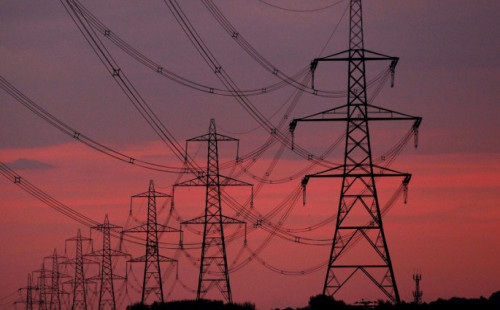
infrastructure such as power grids, transport networks, communications systems
and industrial facilities.
Analysts say the
expression implies not only military defeat, but the dismantling of a society's
ability to function in a modern way.
Has the United States used this approach?
Historians and
analysts say US military campaigns have at times resembled the strategy implied
by the phrase.
- During World War II, US bombing of Japanese cities killed between 240,000
and 900,000 people.
- In the Korean
War, US air campaigns destroyed about 95% of North Korea's power
generation and more than 80% of its buildings.
- In Vietnam,
large-scale bombing extended across multiple countries, contributing to
millions of casualties.
While later
conflicts such as the Gulf War saw increased use of precision-guided weapons,
analysts say the volume of unguided munitions meant infrastructure destruction
remained extensive in practice.
How has the phrase been used politically?
US officials have
repeatedly used the "Stone Age" threat as a form of coercion.
Former Secretary
of State James Baker warned Iraq in 1991 that it would be bombed "back to
the Stone Age" if it did not withdraw from Kuwait.
After the
September 11 attacks, former Pakistani President Pervez Musharraf said US
official Richard Armitage warned that Pakistan would be "bombed back to
the Stone Age" if it refused to join the US-led campaign, a phrase he
recounted as a direct threat.
Trump's recent
statement marks the latest use of the rhetoric during an active conflict.
What is happening in Iran now?
Since the war
began on 28 February, more than 2,000 Iranians have been killed, according to
the figures provided.
Thousands of
civilian sites, including hospitals, schools, universities and pharmaceutical
factories, have been damaged or destroyed. Reports also indicate a projectile
struck near Iran's Bushehr nuclear facility, while Tehran says it has shot down
two US aircraft.
What are the legal implications?
Experts in
international humanitarian law say threats to destroy civilian infrastructure
on a large scale could violate the rules of war.
Janina Dill,
analysing Trump's remarks, said that if the threat implies destroying the
structures of a modern society, "then this would be illegal because it
implies directing attacks against civilian objects".
She added:
"An announcement that they will nonetheless be targeted wholesale would be
an announcement of systematic and serious violations of longstanding laws of
war".
Dill also said:
"The statement is particularly appalling since it repudiates the claim
that the United States is fighting the Iranian regime, implying rather a war
against the Iranian people and society more broadly".
Why does the rhetoric matter?
While the phrase
is often used rhetorically, its historical associations with large-scale
bombing campaigns mean it carries significant weight.
Analysts say such
language can signal intent, shape perceptions of military strategy and
influence how conflicts are understood internationally, particularly when used
during an ongoing war.