Hopes dim for swift end to Iran war after Trump speech, oil prices surge anew
Highlights:
- Trump says Iran will be hit hard for next 2-3 weeks
- Oil benchmarks rise after speech, stocks slide
- US nearing completion of core objectives in Iran, Trump says
- Senior Iranian source says no talks via mediators on temporary
truce
- Iran 'essentially decimated', Trump says
Hopes for a swift end to the Middle East
war faded on Thursday after US President Donald Trump vowed more aggressive
strikes on Iran, in an eagerly anticipated address that disappointed investors
hoping for clearer signals of a way out.
Stocks slid and
oil prices surged after Trump said military operations would be intensified in
the next two to three weeks, offering no concrete timeline for ending a
conflict that sparked global energy supply chaos and has threatened to send the
world economy into a tailspin.
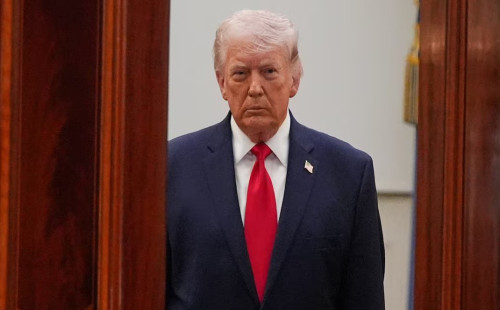
"I can say tonight that we are on
track to complete all of America's military objectives shortly, very
shortly," Trump said in a Wednesday evening prime-time speech.
"We're going
to hit them extremely hard over the next two to three weeks. We're going to
bring them back to the Stone Ages where they belong."
Trump also
suggested the war could escalate if Iranian leaders did not give in to US terms
during negotiations, with strikes on Iran's energy and oil infrastructure
possible.
No reassurance on energy crisis
Benchmark Brent crude prices jumped about 5% to $106.16 per barrel, with little
reassurance from Trump's address about how the critical Strait of Hormuz energy
conduit would reopen. Prices had fallen earlier on Thursday after settling
lower in the previous session.
Stocks took a hit,
with US index futures down 1% and European futures sinking over 1.5%. Almost
all Asian bourses were in the red, with Japan's Nikkei down 1.8% and MSCI's
index of other Asia-Pacific shares down more than 1.5%.
"If he
(Trump) was trying to inspire confidence in the markets, he has not done that.
The key question in all investors' minds is 'When is this going to be over?',
that is what is creating the volatility," said Russel Chesler, Head of
Investments and Capital Markets at Vaneck Australia.
Shortly after
Trump's speech, the Israeli military said it had identified missiles launched
from Iran toward Israeli territory.
Thousands of
people have been killed across the Middle East since 28 February, when the US
and Israel struck Iran, triggering Iranian attacks on Israel, US bases and the
Gulf states, while opening a new front in Lebanon.
Iran also all but
closed the Strait of Hormuz, a vital waterway carrying about a fifth of global
oil and liquefied natural gas, pushing up energy costs and weighing on Trump's
sagging approval ratings months ahead of pivotal midterm congressional
elections.
But Trump in his
speech said the US did not need the strait and he challenged allies who rely on
oil in the region to work towards reopening it.
"Many
Americans have been concerned to see the recent rise in gasoline prices here at
home," Trump said. "This short-term increase has been entirely the
result of the Iranian regime launching deranged terror attacks against
commercial oil tankers of neighbouring countries that have nothing to do with
the conflict."
The International
Monetary Fund, World Bank and International Energy Agency on Wednesday warned
the war was having "substantial, global and highly asymmetric"
effects and said they would coordinate their response, including through
potential financial support to those countries hit hardest.
Prospects elusive for near-term resolution
In an interview
with Reuters earlier on Wednesday, Trump said US-Israeli strikes had ensured
Iran would not obtain nuclear weapons, adding that US forces could return with
"spot hits" if the threat resurfaces.
"They were
right at the doorstep (of a nuclear weapon)," Trump said in his TV
address, without providing evidence, touting what he said were "swift,
decisive, overwhelming victories on the battlefield".
"We are
systematically dismantling the regime's ability to threaten America or project
power outside of their borders."
Prior to Trump's
remarks, Iranian President Masoud Pezeshkian said in a letter addressed to the
American people that his country harbours no enmity towards ordinary Americans.
Trump said
discussions were ongoing with Iranian leaders he considered less radical than
previous leaders. On social media earlier Wednesday, he said Iran had requested
a ceasefire but that would not be considered until its Strait of Hormuz
blockade ends. Iran denied making any such request.
A senior Iranian
source told Reuters on Wednesday that Tehran is demanding a guaranteed
ceasefire to halt its attacks and said no talks have taken place through
intermediaries on a temporary truce.
'GO TO THE STRAIT AND JUST TAKE IT'
Two security
sources from Pakistan, which is mediating in the conflict, told Reuters that
Islamabad had proposed a temporary ceasefire but had not heard back from either
side.
US Vice President
JD Vance communicated with intermediaries from Pakistan about the Iran conflict
as recently as Tuesday, according to a source briefed on the matter, making
clear Trump was open to a ceasefire if certain demands were met.
Trump had
suggested on Tuesday he could wind down the war soon without a deal, while
scaling up threats to withdraw from NATO. He told Reuters he planned to express
his disgust at NATO for what he considers its lack of support for US objectives
in Iran.
Trump did not
explicitly mention NATO in his address but urged countries in need of oil to
buy it from the United States or to "build up some delayed courage".
"Go to the
Strait and just take it," Trump said. "Iran has been essentially
decimated. The hard part is done, so it should be easy."
European states
have sought to appear unruffled, and France's junior army minister Alice Rufo
said operations by NATO in the Strait of Hormuz would be a breach of
international law.