Mandatory listing for large firms, sweeping tax reforms proposed to revive capital market: Experts
In a comprehensive move to reinvigorate the
country's sluggish capital market, key stakeholders have proposed a series of
ambitious reforms ahead of the 2026-27 national budget, including mandatory
listing for large corporations and sweeping tax adjustments.
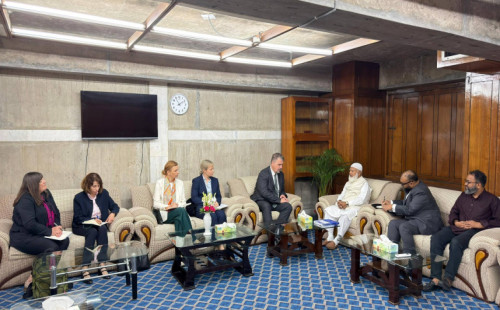
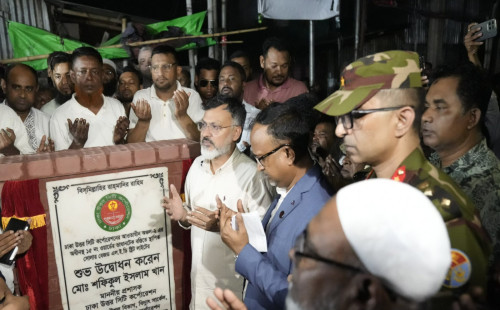
The proposals, placed during a pre-budget
discussion at the National Board of Revenue (NBR) headquarters today (1 April),
aim to boost investor confidence, attract foreign participation and deepen
market liquidity.
Representatives from the Dhaka Stock Exchange
(DSE), Chittagong Stock Exchange (CSE), DSE Brokers Association (DBA), Central
Depository Bangladesh Limited (CDBL), and the merchant bankers' association
presented a unified set of recommendations. The session was chaired by NBR
Chairman Abdur Rahman Khan, alongside senior tax officials.
Market intermediaries stressed that the
capital market must be treated as a central driver of economic growth rather
than a peripheral sector.
Saiful Islam, president of the DSE Brokers
Association, said the proposals are aligned with global standards and designed
to create a more competitive and inclusive investment environment.
He emphasised that the current economic
climate requires the government to treat the capital market as a primary engine
for growth rather than a secondary thought.
A major focus of the recommendations is tax
reform. The DSE proposed that tax deducted at source on interest income from
listed bonds be treated as a final tax liability, simplifying compliance for
investors. To further develop the bond market, it suggested a five-year tax
exemption on interest income from Treasury bills, Sukuk, asset-backed bonds,
and green bonds.
Stakeholders argue that a stronger bond market
would reduce the government's reliance on bank borrowing and lower overall
financing costs.
To address persistently low foreign
participation, currently below 2%, the DSE recommended a five-year exemption on
capital gains tax for non-resident investors. Market leaders believe such
incentives could attract foreign portfolio investment, strengthen foreign
currency reserves, and increase market activity.
The exchange also proposed a five-year tax
holiday for companies listed on the SME board, including startups and
greenfield ventures, to encourage smaller firms to raise funds from the capital
market instead of relying on high-interest bank loans.
For individual investors, the DSE suggested
reducing the capital gains tax rate from 15% to 5% on gains exceeding Tk50
lakh, while keeping gains below that threshold tax-free. According to the
exchange, high tax rates have discouraged participation from high-net-worth
individuals, contributing to declining turnover.
DSE Chairman Mominul Islam said, "We are now in the frontier market;
from there, we want to go to the 'emerging market.' The number of investors in
the capital market is now 16 lakh; we want to increase it to 50 lakh. We want
to increase the daily transaction from Tk500 crore to Tk5,000 crore. As a result,
the government's revenue will increase at least 10 times what comes from the
capital market."
Stressing the need for cooperation for this
transformation, he said they do not want anything that will reduce the
government's revenue, but rather want restructuring.
One of the most significant proposals came
from the DSE Brokers Association, which introduced a "Deemed-to-Be Listed
Company" framework. Under this concept, companies meeting specific
thresholds—such as Tk500 crore in paid-up capital, Tk1,000 crore in annual
turnover, or Tk500 crore in bank loans—would be required to list on the stock
market after a grace period of 15 to 20 years.
The DBA argued that many large corporations
benefit from substantial state incentives without offering public ownership
opportunities. Mandatory listing, they said, would enhance transparency and
broaden investment access.
The association also called for action against
inactive or "shell" companies. It proposed that firms failing to hold
annual general meetings or declare dividends for three consecutive years should
lose tax benefits and be taxed as non-listed entities. This, they believe,
would improve accountability and remove underperforming companies from the
market.
Additionally, the DBA reiterated its demand to
eliminate double taxation on dividend income, noting that the current effective
tax rate for individuals exceeds 40%, discouraging long-term investment.
In the credit market, the association proposed
allowing listed bonds to be used as collateral for large bank loans,
particularly those exceeding Tk500 crore with maturities of more than three
years. This measure is expected to promote capital market-based financing.
Meanwhile, CDBL recommended increasing the
minimum public shareholding requirement from 10% to 20% for companies seeking
tax benefits. A higher public float, it said, would improve price discovery and
reduce the risk of manipulation in thinly traded stocks.
The Chittagong Stock Exchange, for its part,
emphasised the need for modern market infrastructure. It sought policy support
and tax incentives for launching Bangladesh's first commodity exchange and
derivatives trading platform. It also requested tax exemptions on specialised
software imports required to establish these systems.