Urgent policy reforms needed to unlock rooftop solar potential: CPD
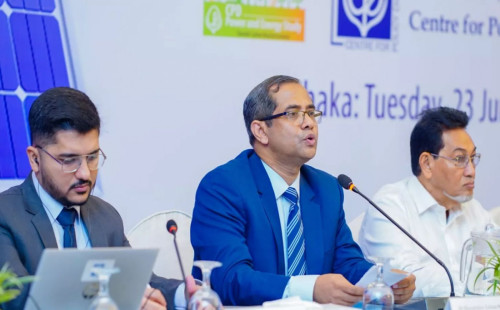
The Centre for Policy Dialogue (CPD) tomorrow
(23 June) called for sweeping policy reforms to scale up rooftop solar adoption
in Bangladesh, saying that the country risks repeating the "retention
failures" of its off-grid Solar Home System (SHS) era unless structural
barriers in financing, taxation, and regulation are urgently addressed.
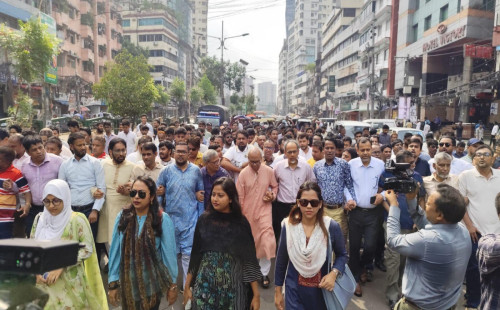
The think-tank made the observations at a
programme at a city hotel, titled "Solar Revolution in Pakistan in the
Eyes of Country's Leading CSO: Lessons for Bangladesh from National Budget
Perspective."
Presenting the keynote, CPD Research Associate
Atikuzzaman Shazeed traced Bangladesh's solar energy journey from the off-grid
SHS programme launched in 2003, which electrified over 20 million people to the
collapse of that model as the national grid reached rural areas, and the
subsequent emergence of rooftop solar as the new frontier.
He noted that SHS installations peaked at
853,000 units in 2013 before plummeting to just 3,455 by 2018, a 99.6 percent
decline in five years, as grid electricity rendered the off-grid model
obsolete.
According to CPD's SHS Survey 2025, nearly 47%
of all installed solar home systems are now non-functional, largely due to
battery failure and the absence of any structured transition or retrofitting
pathway.
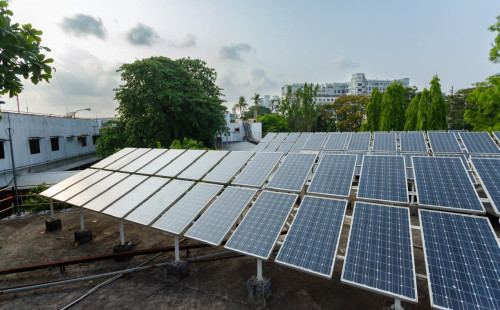
On the on-grid side, Bangladesh currently has
4,551 net metering rooftop installations with a combined capacity of 213.3 MW,
with 1,531 units installed in 2025 alone but 60.4 percent of installations
remain concentrated in Dhaka division.
CPD identified multiple obstacles hampering
faster growth.
On the residential front, cumulative import
duties of 27.5% to 33.6% on panels and inverters inflate upfront costs, while
banks avoid small, long-tenor solar loans and Bangladesh Bank's green
refinancing window suffers from heavy documentation burdens and slow
disbursement.
Regulatory bottlenecks, including system-size
caps and inconsistent net-metering approvals, further discourage smaller users.
For the industrial segment, banks' demand for
100 percent asset-backed collateral effectively blocks the lower-cost OPEX
model, as solar assets and power purchase agreements are not recognised as
bankable security, it said.
SME access remains skewed toward large firms
with existing capital and technical capacity.
On solar irrigation, CPD flagged that more than
90% of Bangladesh's 3,100-plus solar irrigation pumps remain off-grid, with
only the Bangladesh Rural Electrification Board (BREB) model offering farmers
both ownership and grid connectivity yet BREB implements just 8.6% of all solar
irrigation pumps.
Grant dependency remains heavy, with financing
ranging from 50% to 100% subsidy, while actual investment payback periods of 15
to 20 years far exceed the official eight-year estimate.
To address these challenges, CPD recommended
simplifying net-metering eligibility and launching a unified digital
application platform across utilities, rationalising duties on photovoltaic
components, establishing a Renewable Energy Service Company (RESCO) collateral
framework that recognises power purchase agreements as bankable security, and
expanding net metering to solar irrigation pumps to unlock their off-season
surplus capacity.
CPD also called for a national distributed
renewable energy coordination body under Sustainable and Renewable Energy
Development Authority (SREDA) to track retention, not just installations, and
for redesigning institutional incentives so that partner organisations are
rewarded for continued use rather than disbursement alone.