Bangladesh's NDC 3.0 earns spot on ILO Just Transition platform
Bangladesh has received international recognition for
incorporating employment and social protection considerations into its climate
agenda, after its Nationally Determined Contribution (NDC) 3.0 was featured on
the International Labour Organization's (ILO) newly launched Just Transition
Policy Gateway.
The inclusion places Bangladesh
among a group of countries including South Africa, Mexico and Iraq whose
climate plans have been recognised for integrating just transition principles,
the Climate Watch reported today (14 June).
Bangladesh's NDC 3.0 contains a
dedicated chapter focusing on decent work, green skills and social inclusion in
the transition to a low-carbon economy.
According to officials, the recognition reflects years of collaboration among
the government, employers and workers' representatives.
Efforts such as the National Just
Transition Academy, the Dhaka Declaration and consultations led by the Ministry
of Environment, Forest and Climate Change contributed to the process.
They said Bangladesh's experience
mirrors a growing global emphasis on aligning climate commitments with
employment generation, workforce development and social protection measures.
The Just Transition Policy Gateway
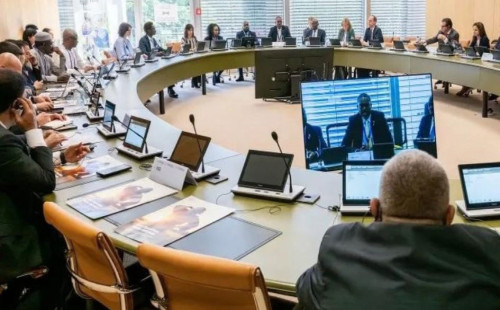
was launched at the ILO headquarters in Geneva on 11 June as a global platform
intended to help countries develop fair and inclusive climate transition
policies.
The initiative was mandated by the
ILO Governing Body in 2023 and formally introduced during a ministerial meeting
of the International Advisory Board of the Global Coalition for Social Justice.
Supported by Germany's Federal
Ministry for Economic Cooperation and Development (BMZ), the platform aims to
place social justice and decent work at the centre of climate action
strategies.
The ILO says the gateway is
designed to help countries turn climate pledges into practical outcomes by
promoting jobs, skills development and social protection while ensuring that
workers and communities are not left behind during the transition to low-carbon
economies.
At the launch event, ILO
Director-General Gilbert F Houngbo emphasised that social and economic
dimensions are essential to climate transitions and called for people-centred
approaches to policymaking.
Barbados Labour Minister Colin
Jordan highlighted the value of countries learning from one another's
experiences, including both achievements and challenges.
Germany's State Secretary for
Labour and Social Affairs Lilian Tschan said successful structural
transformation depends on putting people first, adding that the gateway
combines policy exchange with practical support tailored to national
circumstances.
Representatives from labour and
employer organisations also stressed broader participation in just transition
efforts.
The Employers' Federation of
Pakistan advocated greater employer engagement, while the Nigeria Labour
Congress encouraged governments, businesses and trade unions to use the
platform to strengthen networks and share knowledge.
Officials said one of the
platform's distinguishing features is its integrated policy framework that
brings together employment, enterprise development, skills, social protection
and environmental sustainability.
Developed jointly by the ILO and the
International Training Centre of the ILO (ITCILO) with BMZ support, the
initiative is expected to assist at least 10 countries by 2028 in advancing
national just transition policies through stronger tripartite dialogue.
The gateway also supports the Global
Coalition for Social Justice and builds on commitments made under the call to
action on social dialogue launched at the Hamburg Sustainability Conference in
2024.
According to Climate Watch, just
transition principles are becoming increasingly common in global climate
policy, with nearly 79% of NDCs now incorporating such elements.
For Bangladesh, participation in
the Gateway is expected to bolster work on implementing its NDC, particularly
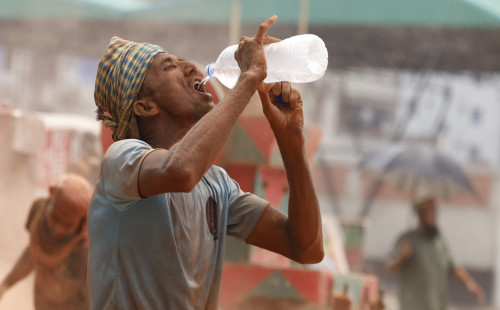
in areas such as green skills training, social protection and support for
workers in sectors vulnerable to climate change.
Mohammad Navid Safiullah,
additional secretary of the Climate Change Wing at Bangladesh's Ministry of
Environment, Forest and Climate Change, said just transition is "not only
an environmental agenda but a broader economic and social transformation
requiring coordinated national action."
Officials said the coming years
will be critical in turning this international recognition into concrete
policies that benefit workers, industries and vulnerable communities across
Bangladesh.