Budget FY27: Education allocation is set to be fixed at 2% of GDP
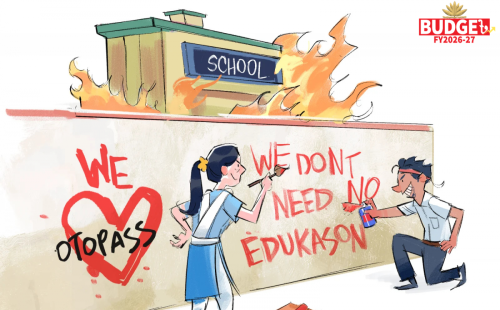
In this year's budget (FY2026-27), the
government is likely set to increase education sector allocations to 2% of GDP,
with a total allocation of Tk136,606 crore.
The budget allocation for education was Tk87,206
crore, or 1.39% of GDP in FY26. In comparison, an allocation of about Tk49,400
crore more has been proposed in the new fiscal year.
The budget proposal for FY27 will be presented
by the Finance Minister Amir Khosru Mahmud Chowdhury at the parliament around
3pm today (11 June).
The proposed budget is expected to have a total
outlay of Tk9.38 lakh crore, making it the largest national budget in
Bangladesh's history.
The government's goal is to gradually increase
government investment in education to 5% of the GDP. To this end, special
importance will be given to technical and vocational education, third language
education, sports, culture, technology-based education and the concept of
"Learning with Happiness."
Prime Minister Tarique Rahman will undertake
initiatives to transform the education curriculum to foster moral values,
social responsibility, leadership qualities and humanitarian character among
students.
The government will seek to create an
environment where students and teachers can realise their full potential
through modern education, training and facilities.
For madrasa students, the government will aim to
improve the quality of science, mathematics, English and information technology
education alongside religious studies and will introduce employment-oriented
training programmes.
The government will aim to establish a framework
enabling students to pursue careers aligned with their talents, preferences and
interests, allowing them to become skilled technicians, technologists,
agricultural entrepreneurs, researchers, artists, teachers, businesspeople,
athletes or professionals in other fields with equal dignity and success.
Co-curricular activities, including debate
clubs, science fairs, cultural programmes and literary practice, will be
encouraged to develop students' latent talents.
Technical education is to be introduced for all
students in phases starting from Grade 6 to transform Bangladesh into a
skills-based economy.
In addition to Bangla and English, a compulsory
third language such as Japanese, Korean, Mandarin, Arabic, French or German
will be incorporated into the curriculum.
To support this initiative, the government will
provide loans of up to Tk10 lakh to students proficient in a third language who
wish to pursue higher education in those countries.
Free education for girls will be expanded up to
the undergraduate level and the government will provide school uniforms, shoes,
school bags for underprivileged students and ensure inclusive education for
children with disabilities and special needs through specialised assistive
technologies and learning materials.
A mid-day meal programme is to be introduced and
gradually expanded nationwide to address students' nutritional needs and ensure
good health.
Healthcare services will also be strengthened,
with particular emphasis on sanitation and hygiene facilities for female
students and teachers.
To promote technology- and AI-based education,
the government is set to implement the "One Teacher, One Tab"
programme, establish multimedia classrooms and expand free Wi-Fi facilities.
Entrepreneurship will be promoted through
stronger industry-academia linkages, apprenticeship and internship
opportunities and support for start-up ventures.
The government will work to transform
"brain drain" into "brain circulation" by engaging highly
educated Bangladeshis living abroad and integrating their global knowledge,
skills and experience into the country's education and research systems.
The government will also prioritise research and
innovation and ensure effective patronage for these sectors.