Budget may raise import duties to safeguard local industries
Local manufacturers of products ranging from man-made fibre
and plastics to glass, steel, bicycles and paper could receive greater
protection under the budget to be proposed today (11 June) through higher
import taxes on competing goods, a move that may support domestic industries.
At the same time, the government is
considering duty reductions on several industrial raw materials, which could
lower production costs for some sectors and create room for lower prices.
However, questions remain over how
much of those benefits would ultimately reach consumers.
Industry stakeholders, however, say raising import duties
can be justified only when local manufacturers have sufficient production
capacity and can ensure product quality. Otherwise, consumers may face higher
prices without receiving adequate alternatives.
Anwar-Ul Alam Chowdhury Parvez,
president of the Bangladesh Chamber of Industries, told The Business Standard,
"If higher taxes are imposed on similar imported products to protect local
industries, but those manufacturers have only 10% to 20% supply capacity, the
policy will not produce good results. The quality of those products must also
be considered."
"If import taxes are increased
in the name of protection without examining these issues, consumer costs will
rise. Instead of restricting imports, the government could reduce raw material
costs for those industries and provide subsidies and other fiscal
support," he added.
Products facing higher import duties
Several large investments have been
made in polyester staple fibre production in Bangladesh in recent years.
To protect those manufacturers, a
5% customs duty is set to be imposed on imports of polyester staple fibre, a
key raw material used in the ready-made garments and non-leather footwear
industries.
The government is also considering
raising customs duties on imported PVC and PET resins from the existing 5% to
10%. Significant investments have been made in the local production of these
plastic industry raw materials over the past few years.
Similarly, imports of gypsum boards
and sheets may face a 20% regulatory duty. Customs duty on imported bicycles
could increase from 15% to 25%, while a new 5% regulatory duty may also be
imposed.
To provide additional support to
local washing machine manufacturers, a 20% supplementary duty may be imposed on
imports. For the paper industry, supplementary duty on greaseproof paper and
glassine paper could rise from 10% to 25%, alongside a new 5% regulatory duty.
A 10% regulatory duty may also be
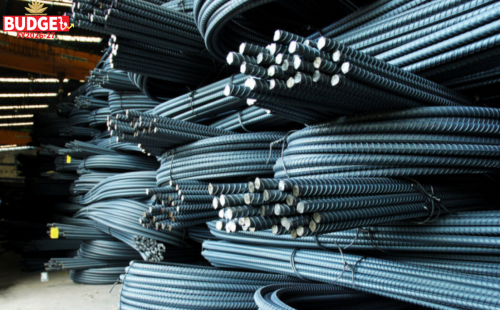
imposed on imports of cold-rolled coils and sheets to protect domestic
manufacturers.
Imports of transformers could face
an increase in supplementary duty from 10% to 25%, together with a new 5%
regulatory duty.
For copper wire and copper tubes, a
10% regulatory duty may be imposed, while customs duty on copper tubes could
increase from 15% to 25%. Customs duty on maize starch may also rise from 15%
to 25%. In addition, a 10% regulatory duty may be imposed on DC motors with
capacities below 1,200 watts.
Sector insiders say these
additional taxes could increase import costs and ultimately raise consumer
prices. They also note longstanding concerns that, even after receiving policy
support and tax benefits, some industries do not always pass on the resulting
cost savings to consumers.
Duty relief for industrial raw materials
Today's budget may also include
duty reductions on a range of industrial raw materials.
Customs duty on five raw materials
used in refractory cement production, including ball clay, may be withdrawn.
Customs duty on five types of raw materials used in float glass manufacturing
could be reduced from 25% to 15%.
For the detergent industry, customs
duty on imported Linear Alkyl Benzene, a key raw material, may be reduced to
1%. Reduced import tax rates are also being considered for two raw materials
used in tyre and tube manufacturing.
In the skincare and beauty products
sector, supplementary duty on two raw materials could be reduced from 30% to
10%.
Meanwhile, the government is
considering withdrawing the existing 5% regulatory duty on key raw materials
used by the coffee processing industry.