Trump faces new Republican resistance in Congress as midterm pressures build
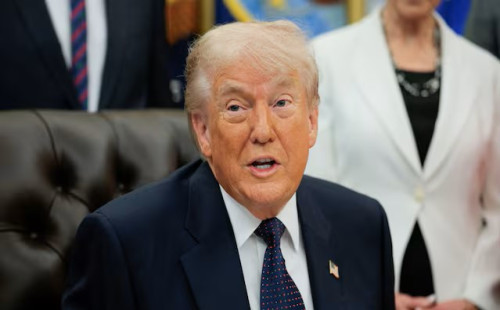
Highlights:
- Republican
lawmakers increasingly break with Trump on key issues and nominations
- Some
Republican opposition driven by frustration over Trump's interference in
Senate races
- Upcoming
battles expected over Trump's nominations, with Senate support uncertain
Donald Trump is facing widening opposition
within his own party as Republican lawmakers in Congress, long reluctant to
defy him, are showing a greater willingness to break ranks with the US
president.
Just over the past week, multiple factions of
Republicans in the Senate and House of Representatives have stepped forward to
rebuke his war against Iran, reject $1 billion in funding tied to his White
House ballroom, force a retreat on his $1.8 billion
"anti-weaponisation" fund and block his legislation on domestic
spying.
The House also defied Trump by passing a bill on
Thursday to provide aid to Ukraine and impose new sanctions on Russia, a
measure that seems destined for a veto by the president.
Republicans and Democrats are sceptical that
Trump faces an actual revolt. But a growing coalition of Republicans is showing
a willingness to break with him, including those Trump has personally helped to
drum out of office, and could pose a threat to his most ambitious initiatives
between now and Election Day.
"I think what you're seeing as you get
closer to the election is that people are going to vote the way they think
their constituents want them to," said Republican Senator Thom Tillis, who
announced his retirement from the Senate last year after opposing the
president's so-called One Big Beautiful Bill.
Democrats largely dismissed the idea, saying
there has been no evidence that the party at large is willing to defy him on
major issues.
"The people that are breaking with him are
ones that were put out by Trump," said Senator John Fetterman, a Democrat
who sometimes supports Trump-backed initiatives. "That actually
demonstrates his absolute control over the party."
One White House official, speaking on condition
of anonymity, chalked Republican dissent up to "election-year
politics". "Not every single member will absorb the political cost on
every single issue," the person said.
"While the media and Democrats attempt to
sow nonexistent divisions, we look forward to continuing this close
relationship to continue fulfilling President Trump's agenda," White House
spokeswoman Abigail Jackson said.
A new willingness to resist Trump
For years, Republican lawmakers have shown
public fealty to Trump by backing controversial cabinet picks, showing little
or no resistance to his executive orders and supporting his signature
legislation despite misgivings about the ballooning deficit and cuts to the
Medicaid healthcare programme for low-income Americans.
Lawmakers and aides say frustration and
resentment have grown since Trump opposed the re-election bids of Republican
Senators Bill Cassidy and John Cornyn and endangered the Republican agenda in
Congress with a series of badly timed announcements.
The inflection point came just before the US
Memorial Day holiday, when Trump's decision to oppose the re-election of Cornyn
and the announcement of his "anti-weaponisation" fund forced Senate
Republicans to abandon a $70 billion immigration enforcement funding bill and
leave town in a mood of anger and frustration.
"That was kind of like a perfect storm of
events," a Senate Republican aide said.
The Senate ultimately passed the immigration
enforcement funding bill on Friday, and Republicans voted against a Democratic
amendment to block the fund, even as some worry it could be used to pay January
6 Capitol rioters and other Trump political allies.
Trump appointed loyalist Bill Pulte to replace
Tulsi Gabbard as a temporary Director of National Intelligence, even though key
Republicans have misgivings.
Senator Mitch McConnell made it clear he would
not back Pulte as a permanent DNI, saying the law required nominees with
extensive experience. "No nominee who falls short of this requirement will
earn my vote," he said in a statement.
Battles over nominations loom
Republican opposition on the floors of the House
and Senate has been mostly symbolic to date.
Three electorally vulnerable Senate Republicans
— Susan Collins, Jon Husted and Dan Sullivan — joined an attempt by Democrats
to ban Trump's "anti-weaponisation" fund on Thursday in a measure
that didn't pass, along with two other Republican attempts to end the fund.
"This whole exercise is to pass President
Trump's top agenda item to secure the border, fund ICE. What's happening on the
floor right now shows the solidarity that we have with the president,"
Republican Senator Jim Banks, a Trump ally, said as lawmakers voted.
Trump's next big challenge is likely to be his
expected nomination of his former attorney Todd Blanche as permanent US
attorney general, a move that could face an uphill battle in the Senate. The
first stop would be the Senate Judiciary Committee, a panel that includes Trump
retribution casualty Cornyn, who said his support would depend on how Blanche
answers certain questions.
"The attorney general is not the
president's private lawyer," Cornyn told reporters. "I want to make
sure he understands the difference and is committed to making sure that the law
is enforced."