BSEC chief vows 'aggressive' push for direct listing of big firms to deepen market
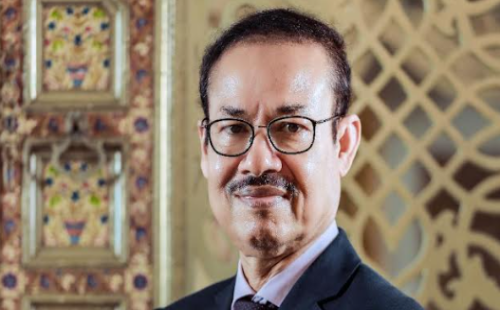
Masud Khan, the
newly appointed chairman of the Bangladesh Securities and Exchange Commission,
has announced an aggressive strategy to bring high-quality companies to the
stock market through direct listing, describing the move as essential for
building stronger institutions and ensuring the long-term sustainability of the
private sector.
Speaking as the chief guest at the 10th
Anniversary Gala Night of the CFA Society Bangladesh yesterday (6 June), Masud
said the regulator would actively encourage state-owned enterprises,
multinational companies and fundamentally strong local corporates to join the
capital market.
"Once you create a listed company, you
bring in more professionals, and ultimately, you solve the issues of succession
and sustainability," he said.
"Private sector
companies often collapse when ownership changes, but listing turns a company
into a lasting institution. I personally think we are going to be very
aggressive in a direct listing. We will identify good companies and tell them:
go for it."
The BSEC chairman pointed out that many
well-governed entities, such as banks and MNCs, already maintain transparent
accounts and do not necessarily need to raise fresh capital through an Initial
Public Offering (IPO). For such firms, he suggested that direct listing is the
most logical route to enter the capital market.
"For banks, MNCs, and good local corporates
that are already capital-sufficient, I will say: I don't want your capital;
just go for direct listing to allow public participation and enhance your
institutional status," he added.
Simplification over complication
Masud, who brings decades of experience from the
corporate sector, laid out a regulatory philosophy based on the mantra:
"Regulate where necessary and simplify where possible." He expressed
a firm commitment to overhauling the existing rulebooks for IPOs, margin loans,
and mutual funds, which he believes have become unnecessarily cumbersome.
"The rules have to be simplified
significantly. If we want the market to deepen, we cannot work in isolation;
market intermediaries must be part of this process," he said.
The BSEC chairman lamented the lack of
meaningful dialogue between the regulator and market participants in recent
years, noting that many constructive suggestions from reform committees
previously failed to "see the light of day" because regulators
believed they knew better than the market.
While advocating for simplification, he issued a
stern warning against malpractice. Referring to a finance minister's stance, he
said, "Please self-govern, but if you are caught violating the rules, your
'chips will fry.' Be very sure that whatever you are doing is absolutely right,
because once caught, there is no easy entry back."
Science of valuation and 'horror' of paper
A key priority for the new BSEC leadership is
the digitisation of the entire capital market ecosystem. Masud described the
current state of reporting as a "horror story," pointing out that
merchant banks and mutual funds are still required to submit applications for
IPOs and rights issues on physical paper. "How are we still living in the
Stone Age? This has to stop immediately," he asserted.
Addressing market volatility, he characterised
the share market as a "science" involving the intricate study of
valuation - a skill he noted is severely lacking among the general investing
public. "We are in a situation with many uninformed investors. As a
result, most trading today takes place in junk shares - small-cap companies or
firms that have been closed for years. This is not efficient."
To combat manipulation in these
"previous" or junk shares, the chairman announced plans for a robust,
integrated surveillance system. This system will align the BSEC, the Dhaka
Stock Exchange, Chittagong Stock Exchange and the Central Depository Bangladesh
Limited with automated triggers to halt or release trading instantly based on
suspicious activity.
CFA Society's milestone
The event also served as a platform for the CFA
Society Bangladesh to celebrate a decade of promoting professional excellence.
The Society recognised the top employers of CFA Charterholders in the country,
including Bangladesh Bank, BRAC Bank, City Bank, IDLC Finance, EDGE AMC, IDLC
Finance, Prime Bank Securities, Shanta Asset Management, Shanta Securities,
Standard Chartered Bank, HSBC Bangladesh, United Commercial Bank. It also
honoured top universities such as the University of Dhaka, BUP, BRAC University,
and North South University for their high registration rates in the CFA
Program.
M Masrur Reaz, chairman of Policy Exchange
Bangladesh, delivered the keynote address, focusing on the need for a conducive
fiscal policy to improve the investment climate.
Asif Khan, president of the CFA Society
Bangladesh, highlighted the society's growth, noting that it now boasts over
131 Charterholders and 80 Associate Members working across the nation's most
reputed financial institutions.