Upcoming budget: Some indications, some reflections
Highlights:
- The budget 2026–27
focuses on human well-being and improving quality of life as its main
development philosophy.
- It aims to balance
austerity with welfare amid domestic and global economic crises,
especially by maintaining subsidies on food, fuel, and fertiliser.
- Economic targets like
6.5% GDP growth and high investment and revenue ratios are seen as overly
ambitious given current conditions.
- Strong emphasis is
placed on social protection, including life-cycle safety nets, family
cards for 26 million people, and disability support.
- Priority sectors
include education, health, agriculture, ICT, and employment, but women's
economic empowerment is relatively neglected.
Some indications have already emerged regarding the content
and size of Bangladesh's upcoming budget. Various statements by the country's
finance minister, along with directives from the prime minister concerning the
budget, have also revealed parts of its possible contents.
These signals and directives have
undoubtedly reassured many quarters, but at the same time, according to many
observers, several questions and ambiguities still remain regarding different
aspects of the upcoming budget. The government will need to clarify these
issues further in the coming days. Yet more, there are also people who disagree
with some of the probable budget proposals.
The first point that needs to be
emphasised is that the discussions and conversations surrounding the budget
clearly indicate that a development philosophy is there in the proposed budget
for fiscal year 2026–27. That development philosophy is "enhancing human
well-being and improving people's quality of life."
This deserves appreciation for two reasons. First, every budget should ideally
have a development vision. Without such a vision, a budget is nothing more than
a balance sheet of income and expenditure. It is reassuring that this year's
budget appears to have recognised that truth. Second, it is heartening that
human well-being and human development have been identified as the development
philosophy of Bangladesh's 2026–27 budget.
Human beings should be at the
centre of development, development of people, development for people, and
development by the people are the ultimate goals of development. In a country
like Bangladesh, this truth is even more relevant. Recognising human well-being
and human development as the guiding philosophy of the budget is a timely step.
Bangladesh's budget for the fiscal
year 2026–27 is being formulated at a time of crisis. One dimension of the
crisis is domestic, and the other is global. Together, these pressures have
placed Bangladesh under significant economic strain.
Naturally, in such circumstances,
discussions of an austere and cost-saving budget will naturally arise. But one
has to remember that while the country faces economic pressures at the macro
level, common people across the board are also struggling to cope with the
crises affecting their daily lives. Therefore, along with the task of tackling
the macro crises, ensuring people's welfare and security is equally important.
The current blueprint of the probable budget promises to maintain a balance
between these two concerns, ensuring people's welfare while maintaining fiscal
restraint. This is both desirable and reassuring.
Indeed, this balance between economy and people is extremely important. While
trying to tighten the budget during difficult times, care must be taken not to
put pressure on people's lives. Budgets must not be balanced at the cost of
unbalancing people's lives. In this context, the upcoming budget has put
emphasis not only on austerity, but also on welfare-oriented policies.
It implies that this is not the time to reduce subsidies on food, fuel, or
fertiliser, regardless of what the International Monetary Fund may suggest.
Removing subsidies on food or fuel now would devastate the lives of common
people, and withdrawing fertiliser subsidies would put food security at risk.
However, there is no denying the
fact that the heavy burden of subsidies has become almost unbearable for the
Bangladesh economy and that reforms are necessary. But given the current
realities, this is not the appropriate time for subsidy reforms, and for the
time being, coping with the present crisis is far more urgent.
To improve people's well-being and
their quality of life, the budget identifies inflation control, employment
generation, job creation, and economic growth as key measures. Each of these is
important for people's well-being. However, the question remains whether the
targets set in these areas are realistic and practical. For example, the
economic growth target for the next fiscal year has been set at 6.5%, while
Bangladesh's current growth rate is only slightly above 3%.
In the context of the present
stagnation of the Bangladesh economy, sluggish investment, and a global
slowdown, how realistic is the expectation that the country's growth will
double within a year? Similarly, it does not seem realistic to expect that
within a single fiscal year Bangladesh's investment rate will rise to 31% of
national income and revenue income to 10% of national income. It appears that
ambition has outweighed practical thinking in these targets.
The upcoming budget also seems
likely to place special emphasis on comprehensive social protection. In a
welfare-oriented state system, this is extremely important. One major dimension
of the proposed social protection framework is the establishment of a life-cycle
based social security system. Initially, the poor, the destitute, and the
marginalised groups will be included in this safety net, and the programme is
expected to be implemented over the next five years.
However, for the success of this
initiative, clear strategies, visible beneficiary targeting and selection, and
precise financial estimates will be necessary. Beyond this life-cycle social
protection framework, the budget is also expected to expand the social safety
net through family cards, in line with the current government's election
manifesto and commitment. About 4.8 million families will benefit, with direct
beneficiaries numbering around 26 million people. This initiative will require
approximately 145 billion Taka in the 2026–27 fiscal year.
At the same time, special
protection measures for persons with disabilities have also been highlighted in
the social protection part of the budget. As a result, the protection of the
rights of persons with disabilities and the provision of necessary services for
them have become part of the budget discussions.
Issues currently under
consideration include specialised schools for people with disabilities and
disability-friendly infrastructure in all institutions. These are not merely
symbolic matters, they are essential components of building an inclusive
society.
The budget's probable blueprint is
also discussing allocations for education and health sectors with human
well-being at the forefront. Efforts to make education more joyful are
extremely important for the mental development of children and adolescents. And
it is gratifying that the budget recognises that fact.
In this context, it would be
beneficial if the budget includes policies to address the excessive time
children spend on digital devices and the harmful effects associated with it.
This is crucial for the mental health of young people. As a part of its human
well-being approach, the budget stresses that children with special needs also
require healthcare and rehabilitation services.
Safe healthcare for everyone must
also be ensured. In this regard, various healthcare protection measures should
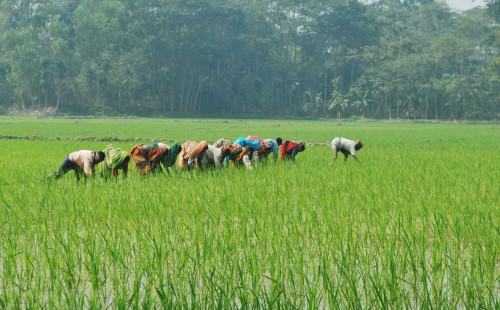
be identified. Food security also plays a major role in human security, which
requires support for the country's long-neglected agricultural sector.
The budget outline includes
provisions to continue agricultural production through support to farmers via
the recently introduced Farmers Cards programme. This initiative will cost Taka
14 billion and would benefit more than 22,000 farmers. The budget is also expected
to include environmental protection measures and tree plantation programmes.
It has been reported that the
budget is going to provide priority to information and communication technology
(ICT), technical education, training, and employment opportunities for workers
abroad. Improving skills, fostering entrepreneurship, creating employment at
home and abroad, and moving Bangladesh's economy to a higher level will improve
people's capabilities and livelihoods. Various indications suggest that these
issues will receive importance in the upcoming budget as well.
One area where the budget still
appears somewhat unclear is women's economic empowerment. Current budget
discussions, directives, and proposals seem relatively silent regarding
expanding women's employment, ensuring support services for working women,
providing incentives for female entrepreneurs, offering loans and other
facilities to women, and providing multidimensional training opportunities.
Likewise, there has been little
discussion about women's safety, rights, and equality in the budget framework.
This is unfortunate. A truly welfare-oriented budget cannot be created while
overlooking women.
The upcoming budget reflects
ambition in many areas, but it must also confront the realities of limited
capacity. In the face of crisis, the budget's toughest challenge will be
managing various obstacles while balancing reform efforts with immediate
economic pressures.
Selim Jahan is an economist and former director, Human
Development Report Office, UNDP