AI-run cameras covering motor vehicles, but who tames Dhaka's wild autos?
Highlights:
- AI cameras detect Dhaka traffic violations, filing hundreds of
automated cases
- Unregistered autorickshaws evade enforcement due to missing
database records
- Illegal vehicles frequently ignore signals, causing congestion at
major intersections
- Motorcyclists increasingly follow rules fearing AI-monitored
traffic fines
- Experts say regulation must accompany AI for effective traffic
management
- DMP preparing policy framework targeting unlicensed vehicles and
illegal rickshaws
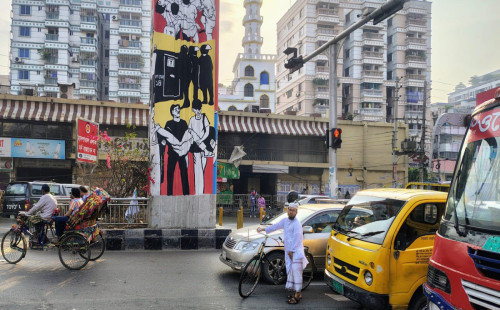
At a traffic signal in Banglamotor in the capital, the red
light is on. A queue of motorcycles and private cars waits behind the stop line.
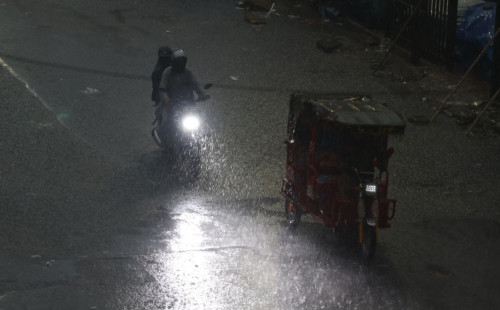
At the same time, several battery-run
autorickshaws coming from the opposite direction edge forward, cutting across
the zebra crossing.
Above them, an AI-powered camera keeps rotating, quietly monitoring the
intersection.
Across major traffic junctions in Dhaka,
the Dhaka Metropolitan Police (DMP) has rolled out automated case filing using
artificial intelligence (AI)-based cameras to detect traffic violations.
Several hundred cases have already been recorded for offences such as running
red lights, crossing stop lines, helmetless riding, and wrong-way driving.
But on the ground, the system tells only
part of the story. While it works effectively for registered motor vehicles, a
large unregulated segment – battery-run autorickshaws, number plate-less
small vehicles and illegal rickshaws – largely remains outside its reach.
The gap that cameras cannot close
Traffic sergeant Rakib, stationed at Banglamotor, told The Business Standard
that enforcement against such vehicles remains difficult due to a lack of
registration. He said even when violations are captured by AI cameras, cases
cannot be filed because these vehicles are not in the database.
He added that unregulated vehicles are making traffic management increasingly
difficult and called for a structured regulatory framework.
During about one hour of observation at
Shahbagh, Hotel Intercontinental intersection, Banglamotor, Karwan Bazar and
Farmgate, battery-run autorickshaws were seen crossing stop lines, occupying
zebra crossings and entering wrong lanes, contributing to congestion.
In contrast, many motorcyclists were seen following signals and wearing
helmets. Several riders said fear of fines has increased since the introduction
of AI-based monitoring.
At Farmgate, ride-sharing driver Md Rubel
told TBS that compliance among motorcyclists has improved due to cameras, but
autorickshaws continue to violate rules. He said rule-following riders are
often blocked by vehicles moving against traffic.
Traffic officials say the AI system relies
on number plates and vehicle databases, making enforcement against unregistered
vehicles difficult.
A DMP traffic official, requesting
anonymity, said notices can be issued only where ownership data exists. Battery-run
autorickshaws without registration cannot be processed for automated case
filing even when detected by cameras.
Autorickshaw drivers, however, argue that
road conditions force their behaviour. Shahid Mia, a driver in Banglamotor,
said it is often difficult to move straight due to pressure from larger
vehicles and that passengers frequently request unscheduled stops.
Technology without structure
Prof Md Hadiuzzaman of Buet said AI-run
cameras can only do their job effectively if basic vehicle discipline is in
place first. He said unregulated autorickshaws and small vehicles must be
brought under a defined system, otherwise AI-based traffic management will
struggle to deliver results.
He added that AI systems depend on
structured data from registered vehicles, and the presence of unregulated
traffic "throws a wrench in the system" by weakening enforcement. He
stressed the need for a classification-based regulatory framework, noting that
cameras alone cannot restore order without stronger structural control.
Experts say AI cameras alone are not
enough to bring discipline on the roads and must be backed by tighter
enforcement against illegal vehicles, improved registration systems, lane
discipline and consistent field-level monitoring.
DMP Additional Commissioner (Traffic) Md
Anisur Rahman told TBS that around 500-600 cases were recorded in the first
week of AI camera operations. He said a plan is underway to bring unlicensed
vehicles, especially rickshaws, under control, and a policy is being prepared.
He added that legal enforcement will
improve once the policy framework is finalised, given current challenges in
identifying such vehicles.