Govt mulls 31 renewable power projects cancelled during interim govt
The government has initiated a move to reopen letters of
intent (LOIs) for 31 renewable energy projects that were cancelled during the
interim government led by Muhammad Yunus.
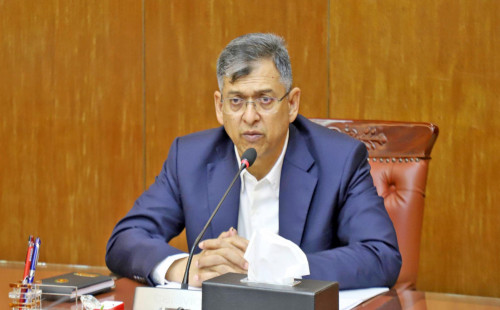
Power, Energy and Mineral Resources
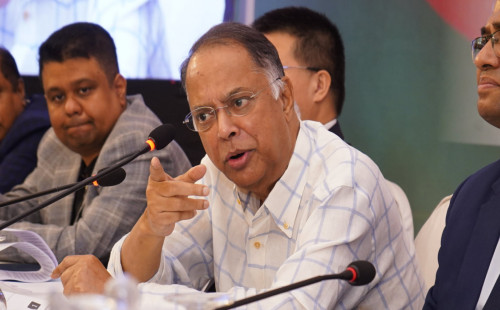
Minister Iqbal Hassan Mahmood said the projects will be reassessed based on
merit before any decision is finalised.
"I am reopening all these
projects. After conducting merit-based evaluations, we will retain those that
are viable," he said.
"I have asked my ministry to present why and on what grounds these
projects were scrapped. Hopefully, within the next 8-10 days, we will be able
to determine our course of action," he said.
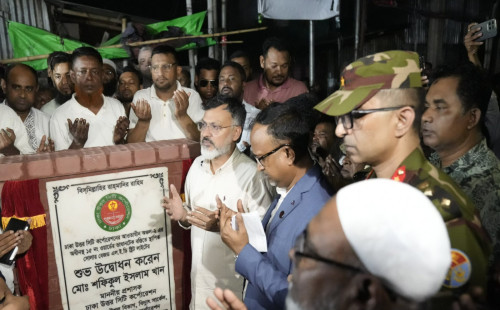
He made the remarks today (27
April) while speaking as chief guest at the Fourth Bangladesh-China Renewable
Energy Forum, organised by Centre for Policy Dialogue at a city hotel.
At the event, Sakir Ahmed,
additional managing director of Citymead Group, warned that policy decisions
taken during the interim period had deepened vulnerabilities in the power
sector.
"The power sector was already
in a fragile state, but the policy actions taken by the interim government
effectively pushed it into the ICU," he said.
He also said, the cancellation of 37 LOIs, despite court directions to continue
or renegotiate the projects, has significantly eroded investor confidence in
Bangladesh's renewable energy sector.
Responding to the concerns, Iqbal
Hassan Mahmood said, the government has initiated a move to reopen letters of
intent (LOIs) for the projects.
The minister further said the
government has set a target to generate 10,000MW of solar power within the next
five years.
"If we could start today, we
would. But there are bureaucratic processes that need to be streamlined first.
Still, we are moving with urgency because the current energy situation leaves
us with no alternative," he added.
The LOIs for these renewable
projects were cancelled in September 2024, about a month after Yunus assumed
office.
At the time, the government argued
that the projects, signed during the Awami League ra under the Quick Energy
Supply (Special Provision) Act 2010, were awarded without competitive bidding.
Energy experts had expressed strong
concerns over the move, warning of long-term impacts on investor confidence and
renewable energy expansion.
The cancelled projects collectively
accounted for around 3,300MW of capacity, the bulk of which was solar power,
alongside nearly 300MW of wind energy and a smaller 25MW waste-to-energy
project.
Analysts say Bangladesh could have
been in a stronger position in its clean energy transition had the projects not
been scrapped.