As foreign minister begins India visit, trust key to Dhaka-Delhi engagement
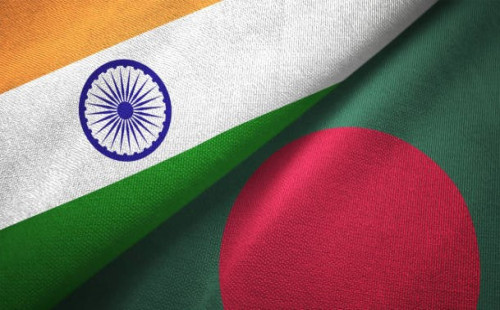
Mutual trust will be the keyword to look
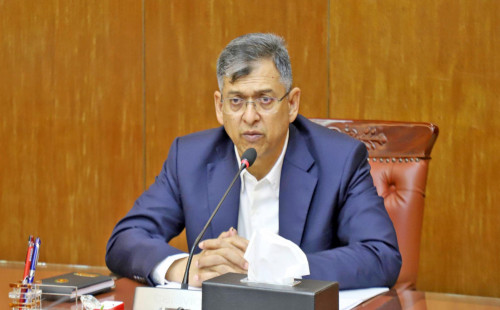
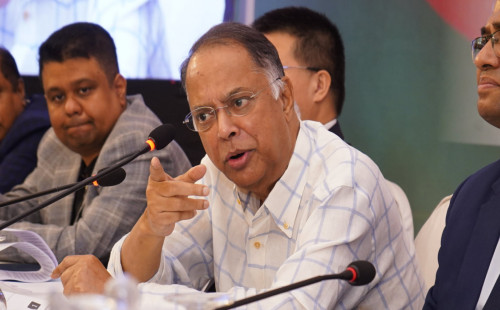
for when Foreign Minister Khalilur Rahman arrives in New Delhi today (7 April),
marking the first structured political-level engagement with India since the
new BNP government headed by Prime Minister Tarique Rahman assumed power.
The visit will be primarily exploratory in nature, rather
than anything else, as Delhi and Dhaka will try to get a sense of the contours
of each other's roadmap for a futuristic relationship, with both sides having
signalled willingness to move out of the past and go ahead positively after
more than a year and a half of strained ties.
The two sides will have a lot of issues to unpack, ranging
from visas, energy and security cooperation, the repatriation of ousted Sheikh
Hasina to Bangladesh, cross-border trade, to negotiations over the Ganges water
treaty, which is set to expire in December.
One component that could be on top of the
agenda is the need for trust quotient to grapple with the issues.
Khalilur, Bangladesh's nominee for the presidency of the UN
General Assembly for 2026-2027, is also expected to enlist India's support for
the election. He had joined the UN secretariat as a special adviser at the UN
Conference on Trade and Development in 1999 and has held several senior
positions within the UN system in Geneva and New York.
A tangible outcome on the subjects mentioned above will
indicate the way the bilateral ties are headed as Delhi and Dhaka seek to
recalibrate and revitalise their ties after the strains witnessed under the
interim administration of Muhammad Yunus.
Indian Ministry of External Affairs spokesman Randhir
Jaiswal told a media briefing on 28 March that India's relationship with
Bangladesh is multi-dimensional and "we not only want to maintain it but
also strengthen it further and take it forward in the future."
Bangladesh High Commissioner to India Riaz Hamidullah said in a speech on the
country's National Day on 26 March that "difficult or sensitive
issues" with India should be addressed "forthright, in all sincerity
and candour" and that the relationship must be able to deliver tangible
outcomes for people on both sides.
This requires political trust between India and Bangladesh
without the banned Awami League. India has been so used to working with the
Awami League that a perception has grown – rightly or wrongly – in Bangladesh
that Delhi cannot work with any other party in power in Dhaka.
If India needs to move on from the past, so does the BNP.
PM Tarique has said both sides should not be weighed down
by the past.
He said on 27 March that the country must not remain stuck
in the past in a way that hinders progress towards the future.
Previously, Indian Prime Minister Modi sent a letter to
Tarique in February through Lok Sabha Speaker Om Birla. The Bangladeshi prime
minister responded to Modi's letter, laying out his vision to take forward ties
between the two countries based on equality and mutual trust.
Modi and Tarique did some early spadework by engaging in
some Eid diplomacy in March. Tarique expressed hope in a letter to Modi on 20
March that this occasion would further strengthen the longstanding bonds of
friendship and people-to-people ties between the two countries. The letter
followed Modi's greetings to Tarique and the people of Bangladesh on
Eid-ul-Fitr.
Tarique had earlier written to Modi outlining his vision
for the India-Bangladesh relationship and indicating that Dhaka is ready to
move forward without being inhibited by the past.
Tarique raised three important points in an earlier letter
dated 26 February. First, underlining the "historic and
long-standing" ties between India and Bangladesh, he said Bangladesh
attaches high importance to its ties with India, shaped by shared history,
culture and geography.
Second, the PM spoke of the need for both countries to
address issues in ways that would result in gains for the public. He said in
the letter that by doing this, there is a lot both countries can accomplish in
terms of their shared interests. Tarique added that Dhaka looks forward to
advancing ties based on dignity, equality, mutual trust and respect, and also
benefit-sharing.
Third, Tarique, in a more personal outreach to Modi, said
in his letter, delivered within weeks of his oath-taking, that he is mindful of
the Indian PM's vision for "Viksit Bharat 2047" whose mention is
significant as Modi seeks to turns that vision into a core foreign policy theme
with initiatives aimed at strengthening development partnerships with friendly
countries, in sync with India's strategic interests.