Opposition seeks only power-sharing reforms: State minister
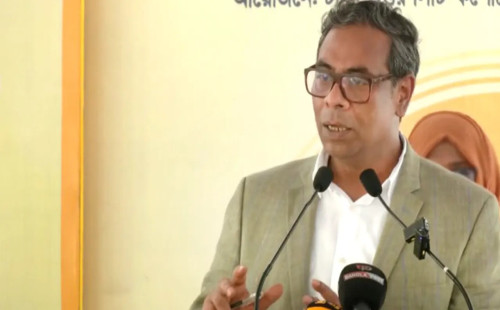
Health State Minister MA Muhit has criticised the
opposition in parliament over its reform proposals, saying they only demand
reforms that would secure a share of power for themselves.
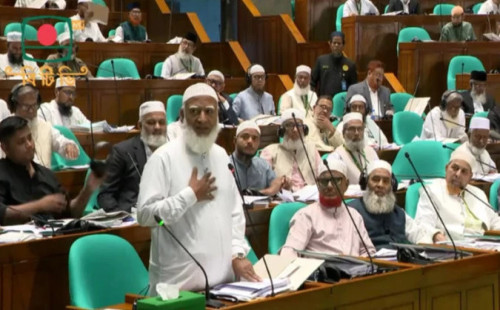
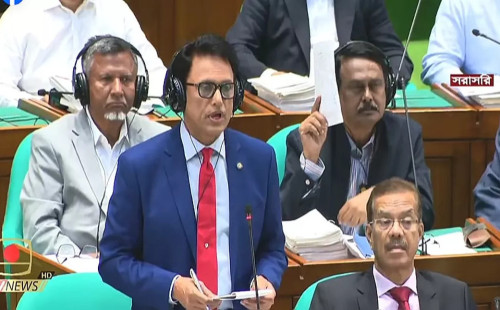
Speaking during the general
discussion on the proposed 2026–27 national budget today (28 June), he said the
opposition has not held a single discussion on reforms in the health sector.
He said, "During the previous
15 years of rule, the country's economy, healthcare and education systems had
deteriorated. Following the fall of the [Awami League] government through a
mass uprising, public expectations from the newly formed democratic parliament
were high, and the government was working to meet those expectations despite
limited resources."
The state minister said, "The [interim government's] Health Reform
Commission submitted detailed recommendations, and the government would have
welcomed discussions on the report."
Muhit further said the main
objective of this year's health budget is to rebuild the weakened healthcare
system and develop an integrated model that ensures accessible, affordable and
inclusive treatment for all, regardless of income.
He said the allocation for the
health sector had been increased from about Tk35,000 crore in the previous
fiscal year to Tk69,000 crore this year.
"Investment in health not only
involves building hospitals but also increases life expectancy, reduces
poverty, improves productivity, reduces inequality and ensures overall social
welfare," he added.
Highlighting key challenges in the sector, he said that around 71% of deaths in
Bangladesh are caused by non-communicable diseases such as diabetes,
hypertension and chronic kidney disease, while nearly 79% of healthcare costs
are borne out of pocket by patients, compared to 10% in Thailand and 18% in the
Maldives.
Muhit also pointed to pandemics,
rapid urbanisation, rising healthcare costs and the need for technology-driven
services as major challenges, adding that the government's goal is not
unplanned construction of hospitals and infrastructure but the development of
an effective healthcare system.
The state minister outlined reforms
covering infrastructure, human resources, healthcare management,
decentralisation and transparency in procurement processes.
Muhit concluded, saying,
"Equal-quality healthcare would be ensured for both urban and rural
populations through a primary healthcare–based system, and the government would
prioritise disease prevention alongside treatment, aiming to reduce health
risks before people become ill."