Govt plans corporate-style management for Super Specialised Hospital
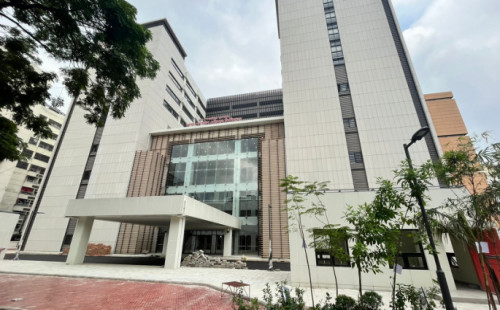
More than three and a half years after its inauguration,
the Bangladesh Medical University (BMU) Super Specialised Hospital has yet to
become fully operational.
The government is now planning to
overhaul the hospital's management structure by bringing it under the Companies
Act.
A bill to that effect is expected
to be placed before parliament soon.
Professor Dr Abul Kalam Azad, BMU's pro-vice chancellor (Administration), told
The Business Standard that the government plans to operate the hospital under
the Companies Act because the existing university law does not provide
sufficient flexibility to run the institution as intended.
"The current university law
does not allow us to operate the hospital the way we want. That is why a
decision has been made to bring it under the Companies Act. The proposal has
already received approval from the cabinet and all relevant authorities. If
parliament approves it, the hospital will be governed under the Companies Act
rather than the university law," Azad said.
"If our proposal is approved,
the Super Specialised Hospital will operate on a model similar to private
hospitals such as Square, Apollo and Evercare. Our goal is to provide advanced
healthcare services while keeping treatment costs significantly lower than
those charged by private hospitals. We also plan to introduce liver
transplantation and several other complex medical services from next
month," he added.
Speaking at a press conference
yesterday to announce the university's budget, BMU Treasurer Professor Dr
Nahreen Akhtar said that parliament is currently considering a separate law to
enable the Super Specialised Hospital to provide specialised services.
"A new policy framework is
being approved, and the hospital will be operated under that framework in the
future," she said.
Officials familiar with the matter
said that under the existing BMU Act, physicians must be recruited on fixed
government salary scales. Since the Super Specialised Hospital is intended to
provide highly specialised treatment, it requires the flexibility to recruit
specialists with more competitive salaries, which would be possible under the
proposed legal framework.
They also noted that under the
current university system, even the procurement of minor equipment requires
lengthy administrative correspondence. The hospital cannot make purchases
independently, as all procurement must receive university approval, often
resulting in delays due to bureaucratic procedures.
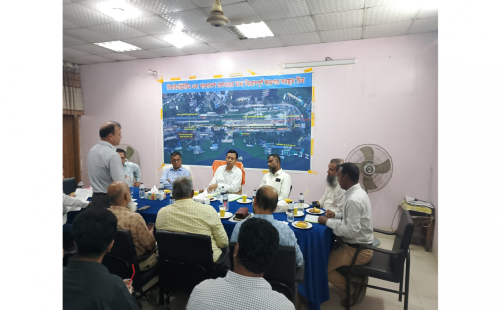
Earlier, on 11 May, the university
syndicate formed a seven-member committee to identify solutions to these
operational challenges and help make the hospital fully functional.
The committee is chaired by
Professor Dr Abul Kalam Azad, Pro-Vice Chancellor (Administration), with
Professor Dr Saif Ullah Munshi, Director of the Super Specialised Hospital,
serving as member secretary.
Other members include Pro-Vice
Chancellor (Academic) Professor Dr Nazrul Islam, Pro-Vice Chancellor (Research
and Development) Professor Dr Mojibur Rahman Howlader, Treasurer Professor Dr
Nahreen Akhtar, Registrar Professor Dr Mostafa Kamal, and Proctor Professor Dr
Sheikh Farhad.
The committee's recommendations
will form the basis of the proposed legislation to be placed before parliament.
BMU's Tk1,500 crore Super
Specialised Hospital was inaugurated in September 2022 with the promise of
providing world-class treatment for critically ill patients who would otherwise
seek care abroad.
The hospital features 11
international-standard modular operating theatres and houses five specialised
centres: the Cardio and Cerebrovascular Centre, the Hepatobiliary and Liver
Transplant Centre, the Mother and Child Health Care Centre, the Kidney Disease
Centre, and the Accident and Emergency Centre.
It has a capacity of 750 beds,
including 14 ultra-modern operating theatres, a 100-bed intensive care unit
(ICU), a 100-bed emergency unit, six VVIP cabins, 22 VIP cabins and 25 deluxe
cabins.