Thousands of Hungarians join first Budapest Pride march since Orban's defeat
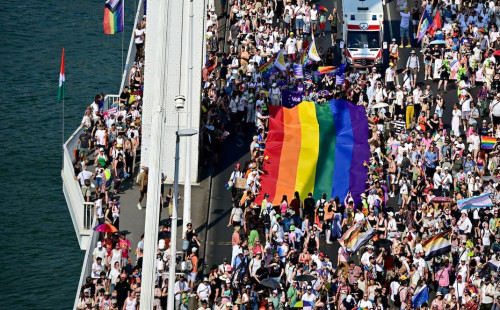
More than 10,000 Hungarians on Saturday joined Budapest's
first annual Pride march since right-wing leader Viktor Orban's election defeat
in April, braving record heat in the city to walk with huge rainbow and
European Union flags.
Last year's march, which Orban
tried to ban as part of his wider policies targeting LGBTQ+ rights, turned into
a mass anti-government demonstration that attracted tens of thousands of
people.
This year, after Orban's defeat to
Peter Magyar's centre-right Tisza party, the ban was lifted and the march was
cleared to go ahead.
Fanni Fajth, an 18-year-old student, said the mood was much more optimistic
after the political change in the country, and due to hopes for new rights
related to adoption and marriage in the future.
"Everyone is just so much more
uplifted," she said.
"I think it would be wonderful
if we finally had equal rights after all these years."
Orban, who cast himself as a
defender of what he called Christian values against Western liberalism, passed
laws ending the change of gender in personal documents, halting adoption by
same-sex couples and banning materials in schools seen as promoting
homosexuality or gender transition.
"The biggest change is
actually the change in politics in the country," said Mate Tarnai, a
51-year-old chemist. "We feel more freedom personally as well, and also
the atmosphere in the country is much more relaxed than last year."
Tarnai also said he hoped for equal
rights under Magyar's government.
Magyar, a conservative, has asked
for patience when asked by Hungarian media about changing legislation that
curtailed the rights of the LGBT community.
Boglarka Boruzs, 23, an interpreter
and translator, said that for her the biggest change from Orban's rule was that
LGBTQ+ people could feel safer and more accepted in everyday life, and
politicians held the power to "make society understand that it's okay to
be gay."