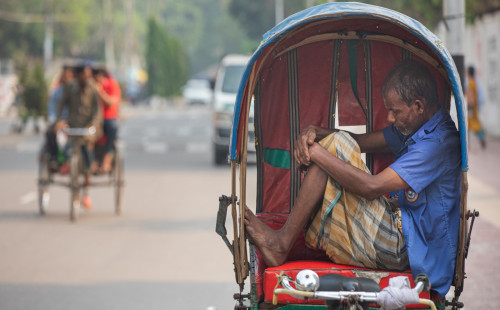
Police plan phased curbs on autorickshaws to ease Dhaka traffic

Highlights:
- DMP
plans phased ban on battery autorickshaws to reduce congestion
- Initial
restrictions target VIP corridors Motijheel, Uttara, Gabtoli routes
- Three
phases: road bans, regulate charging, expand citywide enforcement
- Focus
on penalizing owners, not drivers, to avoid unrest
- Alternative
routes proposed to improve connectivity and traffic flow
- Millions
depend on autorickshaws, prompting gradual, cautious implementation
Dhaka Metropolitan Police (DMP) is planning to
restrict battery-powered autorickshaws on major roads in phases to ease traffic
congestion in the capital, according to police officials.
Under the plan, autorickshaws will first be
removed from key routes, while alternative road connections are also being
considered to improve traffic flow, officials said.
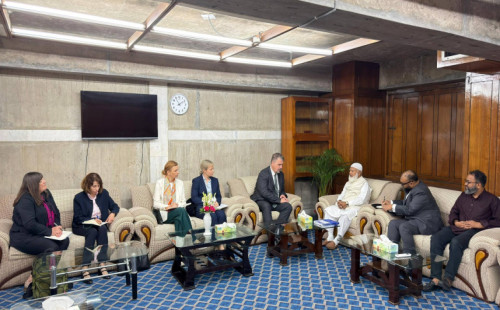
Regarding this, Prime Minister Tarique Rahman
heard from experts and shared ideas with police officials and relevant
authorities Wednesday, according to Prime Minister's Deputy Press Secretary
Jahidul Islam Rony.
Phased autorickshaw restrictions
Under the proposed plan, DMP's traffic division
will first restrict battery-powered autorickshaws from key VIP corridors
stretching from Motijheel to Uttara and Gabtoli bus stand.
The restrictions will then be extended gradually
to other major roads, followed by inner roads across the capital, officials
said.
Before enforcing the restrictions fully, police
may conduct drives targeting charging points across the city. Police officials
said, citing an intelligence report, that many autorickshaw charging garages
operate using illegal electricity connections and that some are run by local
political actors from different parties, including the banned Awami League.
Three-phase enforcement plan
Police officials said the initiative will be
implemented in three phases as part of a broader strategy to reduce congestion.
In the first phase, VIP roads will be cleared of
illegal autorickshaws. In the second phase, charging points will be brought
under regulatory control, while the import of autorickshaw parts may be discouraged.
In the final phase, enforcement will be expanded
gradually across the city. Instead of taking direct action against
autorickshaws or their drivers, appropriate action will be taken against the
owners. In this regard, cases will be filed against the owners of charging
points and garages, police officials said.
As part of efforts to make the capital free from
traffic congestion, Dhaka Metropolitan Police (DMP) has already begun eviction
drives to clear footpaths in the city. Police officials said action against
illegal battery-powered autorickshaws will be taken only after footpaths are
cleared.
The police are taking action against illegal
battery-powered autorickshaws in line with instructions from the prime
minister, several police officials confirmed.
Exploring alternative routes
DMP is also exploring alternative routes to
reduce congestion at key entry and exit points of the capital.
One proposal involves a road link from Purbachal
to Banasree, using internal roads of Bashundhara Residential Area and
connecting through areas near United International University, Swadesh Property
and Aftabnagar.
Deputy Commissioner (Traffic, Gulshan Division)
Mizanur Rahman told TBS that feasibility studies have been conducted jointly by
DMP officials and Rajuk engineers.
Officials assessed road conditions, traffic
pressure, connectivity capacity and safety risks during site inspections, he
said.
"If implemented, the route could improve
connectivity and reduce traffic congestion, increasing the efficiency of public
transport," he added.
Policy context and previous efforts
Police officials said the government has
identified illegal battery-powered autorickshaws as the main cause of traffic
congestion.
They said the defunct Awami League and the
previous interim government had taken several initiatives to regulate these
vehicles and restore traffic discipline across the country, including the
capital, but those efforts repeatedly failed.
After the BNP came to power under the leadership
of Tarique Rahman, the issue of traffic discipline was given priority,
officials said.
Initially, the government considered not
allowing battery-powered autorickshaws to operate on roads after Eid. A survey
was also conducted across the country in this regard, and lists of
autorickshaws, owners, garages and charging points were prepared.
Survey findings and infrastructure
According to the police survey, there are around
3.8 million battery-powered autorickshaws across the country, involving
approximately 4.3 million workers.
Of these, about 3 million autorickshaws operate
in Dhaka metropolitan areas, while around 3.3 million drivers are based in the
capital, the survey shows.
Officials said the large number of workers
involved is a key reason behind adopting a phased approach rather than
immediate enforcement.
According to the survey, there are 20,547
autorickshaw garages in Dhaka metropolitan area. Of these, 3,524 are linked to
the Awami League, 692 to the BNP, 14 to Jamaat, 30 to Sramik Dal and 50 to
Krishak Dal, while 16,237 operate independently.
The survey also identifies 16,148
battery-powered autorickshaw charging points in the capital. Of these, 2,287
are linked to the Awami League, 688 to the BNP, 14 to Jamaat, 30 to Sramik Dal
and 50 to Krishak Dal, while 13,079 are independent.
Police officials said some of these facilities
operate outside formal regulatory frameworks.
Official response
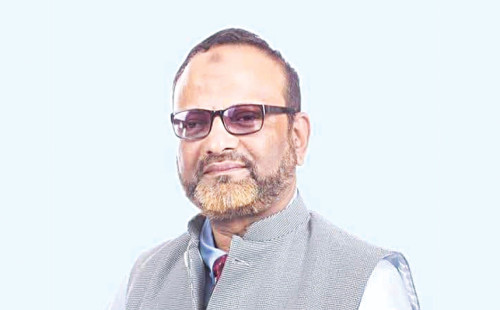
Additional Inspector General of Police Khondaker
Rafiqul Islam told The Business Standard that authorities are working on
short-, medium- and long-term plans to ease congestion.
"The prime minister has already held
meetings with the police headquarters and DMP. We have prepared plans and are
implementing them gradually," he said.
"We will not stop battery-powered
autorickshaws suddenly. Doing so would affect livelihoods, and workers and
owners may take to the streets. We will proceed step by step," he added.
He also said charging points would be brought
under control gradually and that authorities would avoid steps that could
create panic among people dependent on these vehicles.