Govt to shift to quantifiable energy security, diversify industrial base: Titumir
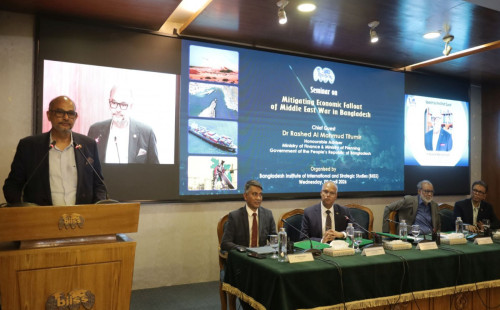
The government is moving to establish a
"quantifiable" framework for energy security and diversify the
country's industrial base, as it seeks to stabilise an economy marked by high
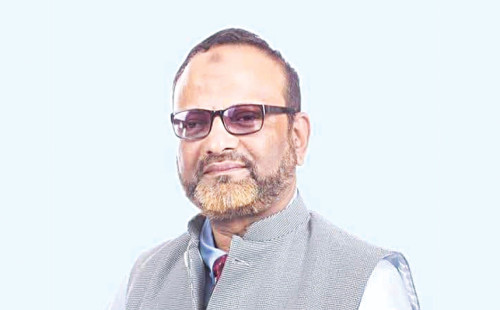
inflation and sluggish growth, said Dr Rashed Al Mahmud Titumir, prime minister's
adviser on the Ministry of Finance and Planning.
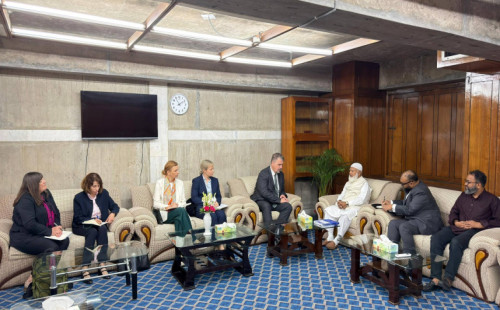
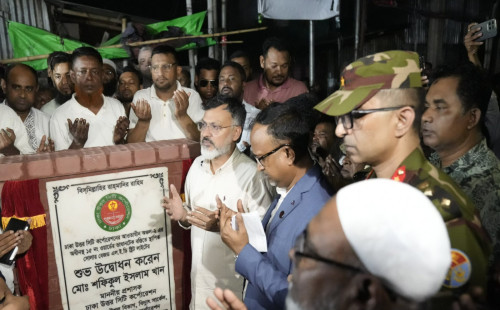
Speaking as the chief guest at a seminar titled
"Mitigating Economic Fallout of Middle East War in Bangladesh" on
Wednesday (8 April), Titumir criticised past administrations for focusing on
"propaganda over policy."
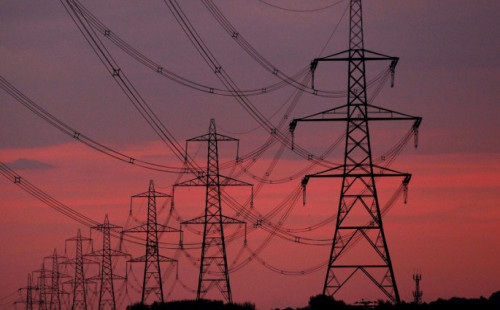
He argued that while visible electricity
generation projects were celebrated, the country's strategic fuel reserves have
steadily declined.
The adviser stressed that energy security must
be defined through measurable indicators rather than symbolic achievements.
Citing data, he noted that the Eastern Refinery
was once capable of ensuring a 30-day fuel security buffer, which has now
dropped to around 17 days.
To address the situation, the government has
adopted a multi-pronged approach, he said.
This includes diversifying energy sources away
from costly spot-market LNG dependence, securing external financing support
from development partners such as the International Monetary Fund (IMF), World
Bank, Asian Development Bank, and Islamic Development Bank, and strengthening
the overall energy mix through renewable sources and nuclear power.
He added that the Rooppur Nuclear Power Plant is
expected to contribute to the national grid soon.
Titumir acknowledged that Bangladesh's economy
has become overly reliant on a limited number of sectors, particularly
ready-made garments, and said the government has identified five priority
industries to expand export capacity and domestic production.
These include agro-processing, pharmaceuticals,
leather and leather goods, light engineering, and ICT and IT-enabled services.
On macroeconomic management, he said the
government aims to maintain foreign exchange reserves at around $30 billion,
while ensuring better coordination between fiscal and monetary policies without
resorting to what he described as "directed systems."
"We inherited an economy with around 10%
inflation and nearly 3% growth. A democratic government cannot ignore the
burden of price hikes on ordinary citizens, especially when real wages have not
increased," he said, adding that policy decisions would prioritise public
welfare alongside economic stability.
Highlighting regional economic opportunities,
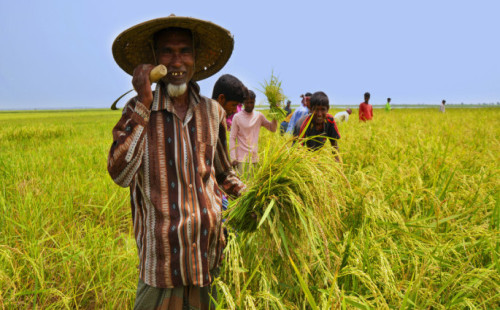
Titumir said the government plans to leverage agricultural surpluses in the
northern districts, particularly in Rajshahi and Rangpur divisions, for processing
and export.
He noted that these regions produce surplus
maize, potatoes, fruits, and dairy products, alongside emerging niche products
such as mozzarella cheese in Thakurgaon and tulips with export potential in
European markets.
Titumir said that the government's broader
objective is to transition the economy from what he termed a "crony-based
system" to a more competitive and productive structure, drawing on
historical examples of poverty reduction achieved in previous decades.