Upstream rains flood haors, endanger boro harvest
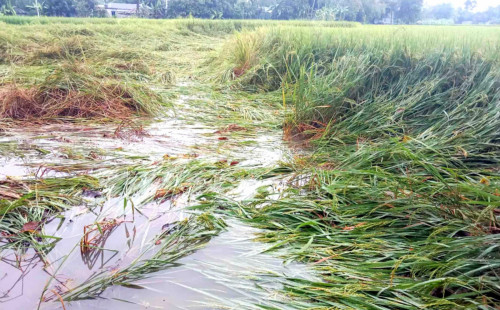
Thousands of hectares of boro paddy in
Sunamganj's haor areas are under threat as severe waterlogging triggered by
unusually heavy upstream rainfall continues to inundate croplands across the
district.
The situation has
turned critical since the last week of March when excessive rainfall in
upstream catchment areas caused rivers to swell and overflow, sending water
rushing into the low-lying haors.
Farmers are now
locked in a dispute over how to manage the excess water.
While those in the upper haors are
pressing to cut embankments to ease waterlogging, downstream farmers are
resisting the move, fearing their fields will be submerged.
According to
official data, at least 1,189 hectares of boro land have already gone
underwater.
Sources at the
Water Development Board (WDB) said 710 Project Implementation Committees (PICs)
were formed this season across 53 haors to construct crop protection
embankments.
Although earthwork
has been completed, turfing is still underway in many areas.
Rainfall data shows a sharp increase this year, with Sunamganj recording around
200 millimetres of rain in March compared to just 5 millimetres during the same
period last year.
"The excessive
rainwater from upstream has overflowed rivers and entered haors from multiple
points," said a senior WDB official.
An emergency
meeting held by the district administration on March 31 was followed by field
inspections to assess drainage requirements.
Authorities have
so far cut embankments in at least 10 haors on a limited scale to release
trapped water.
However, tensions
among farmers persist.
"If farmers
in the upper areas cut the dams, those downstream resist to protect their
crops," said Md Selim, a resident of Mohanpur village in Sunamganj Sadar
upazila.
According to the
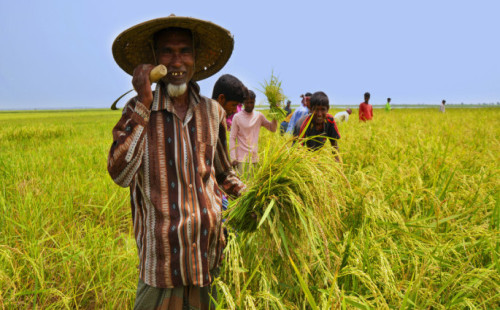
Department of Agricultural Extension (DAE), boro has been cultivated on 223,511
hectares in more than 200 haors in the district this season.
"If fully
harvested, the crop could yield around 1.4 million tonnes of rice, with an
estimated market value of Tk5,050 crore," said DAE Deputy Director Md Omar
Faruk.
"But farmers
now fear significant losses due to waterlogging and the possibility of further
heavy rainfall," he said.
Waterlogging has
already affected several haors, including Mini Pagnar, Halir, Kailani, Chhayar,
Putiyar, Dakuar, Joalbhanga and Kanlar.
Local farmers
complained that many natural drainage canals have been encroached upon or
filled up over the years, worsening the situation.
Chittaranjan
Talukder, vice-president of Haor Banchao Andolan, said early and intense
rainfall has overwhelmed the natural water bodies.
"Rivers,
canals and beels that usually act as reservoirs are already full and
overflowing. Waterlogging is widespread, and farmers are struggling to
cope," he said. adding that proper dredging of rivers and wetlands could
help mitigate the crisis.
WDB Executive
Engineer Mamun Howlader said emergency drainage efforts are underway.
"Rainfall in
both Cherrapunji and Sunamganj has been significantly higher this year. Some
haors are already being drained," he said.
Officials warned
that the situation may worsen, with heavy rainfall forecast for April 6-7.
"As the
season progresses, timely intervention is crucial to prevent large-scale crop
losses," said Omar Faruk.
With uncertainty
looming, harrowing farmers are now anxiously waiting for effective measures to
save their standing crops.