Data gap stalls disability inclusion: Experts call for unified numbers to drive employment
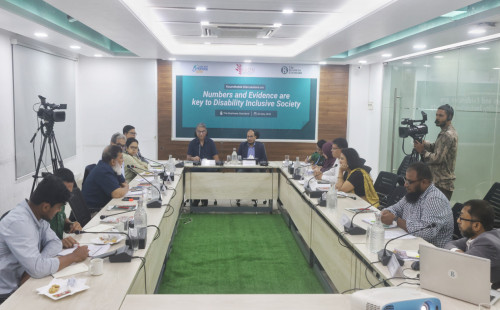
Discrepancies in national disability data and the lack of a
synchronised digital database are acting as major hurdles in formulating
effective policies for the inclusion of persons with disabilities in the
workforce, experts and policymakers said at a roundtable yesterday (20 May).
The
policy discussion titled "Data matters: Numbers and evidence are key to
disability inclusive society", was jointly organised by the Bangladesh
Business & Disability Network (BBDN) and BRAC Bank in collaboration with
The Business Standard. The session was moderated by TBS Senior Executive Editor
Sharier Khan.
Disability inclusion expert Rejaul Karim Siddiquee pointed out the stark contrast in disability prevalence rates reported by various government agencies.
He said only 1.43% of the population has a disability according to the
Population and Housing Census 2022, whereas the National Survey on Persons with
Disabilities (NSPD) 2021 placed the figure at 7.14%.
"The
failure to establish a consistent population size – with government figures
fluctuating between 1.4% and 7% – is a critical barrier to effective resource
allocation."
He
argued that the nation must shift its perspective. "We must move from a
medical model of impairment to a social model that focuses on removing the
systemic barriers that exclude 7% of our nation from the workforce," he
added.
Shah
Mohammad Mahboob, director general of the Department of Social Services, said
discrepancies between datasets used by different government agencies highlight
the need for better coordination and methodological alignment in data
collection.
Citing the example of Korail slum, where authorities initially prepared for
around 33,000 households based on BBS estimates while collecting data for the
family card programme, but eventually identified nearly 44,000 households,
roughly 25% higher than expected.
He added that similar mismatches have been observed in multiple areas, forcing
authorities to add an additional 20-25% to BBS figures during implementation.
However,
he stressed that this should not be interpreted as a failure of BBS, noting
that different institutions collect data using different parameters and
criteria, making stronger communication and coordination among agencies
essential.
Aziza Rahman, deputy director of Bangladesh Bureau of Statistics (BBS),
acknowledged the technical challenges in bridging these gaps.
"There
is a realistic scope for integrating household income and expenditure survey,
labor force survey and administrative datasets, but it requires a unified
technical approach and rigorous synchronization process."
Albert
Mollah, executive director of Access Bangladesh Foundation said the Disability
Identification System (DIS) under the Ministry of Social Welfare can generate
28 different types of reports, including employment-related reports for persons
with disabilities.
However,
he said DIS, BBS databases, and other administrative datasets remain
disconnected from one another, limiting the ability of agencies to share and
use disability-related information effectively.
Mollah
also criticised the absence of disability indicators in the government employee
management system under the Ministry of Public Administration, saying the
government currently cannot determine how many persons with disabilities are
employed in public service despite having a digital database of over 1.45
million government employees.
Society
for the welfare of the intellectually disabled (SWID) Bangladesh secretary
general Md Mahbubul Munir pointed to serious weaknesses in identifying
neurodevelopmental disabilities, saying even medical professionals sometimes
misclassify conditions such as autism, Down syndrome and cerebral palsy due to
limited awareness and training.
He
cautioned that weak and unreliable disability data prevent organisations of
persons with disabilities (OPDs) from presenting evidence-based demands before
policymakers.
To
fix these discrepancies, the International Labour Organization (ILO)
representative Syed Atikul Alam recommends adopting global methodologies.
He
said, "Adopting the Washington Group Questions is vital for Bangladesh to
meet international standards and capture the true reality of disability in our
labor market." adding that international best practices show that linking
disability and employment data is the key to unlocking better livelihood
outcomes.
Anika
Rahman Lipy, assistant director at the Centre for Disability in Development
(CDD), echoed these concerns, noting that current statistics fail to capture
the full picture.
"Our
field experience shows that disability-disaggregated socio-economic data is
currently the most lacking component in evidence-based planning," she
said.
Responding
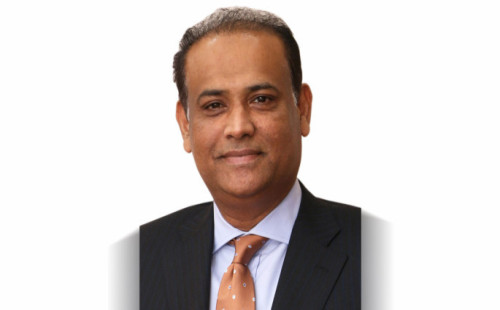
to concerns about workplace productivity, BRAC Bank MD and CEO Tareq Refat
Ullah Khan said the bank's experience employing persons with disabilities has
been 'very surprising and amazing,' adding that employees with disabilities
performed exceptionally well when given proper opportunities.
"Every
person is unique, and if given the opportunity, they can flourish," he
said, arguing that disability inclusion has made his organisation more
empathetic and collaborative internally.
The
dialogue was also attended by central bank's additional director Qazi Mutmainna
Tahmida, BRAC Bank Senior Executive Vice President Ekram Kabir and concluded
with a vote of thanks from Bangladesh Business & Disability Network
director Aziza Ahmed.